Social media and messaging apps have created a world full of abbreviations, acronyms, and internet slang. One term that frequently appears in chats, stories, comments, and direct messages is SMH.
If you have seen someone use this abbreviation on Snapchat and wondered what it means, you are not alone. Many users encounter it while chatting with friends, responding to snaps, or reading social media conversations.
Understanding common internet slang helps people communicate more effectively online and avoid misunderstandings.
Since Snapchat conversations are often fast-paced and informal, abbreviations like SMH are widely used to express emotions quickly without typing long sentences.
People search for the meaning of SMH because its interpretation may not always be obvious, especially for those who are new to social media slang. Knowing what it means can help you better understand conversations and respond appropriately when someone uses it in a message or comment.
Quick Answer
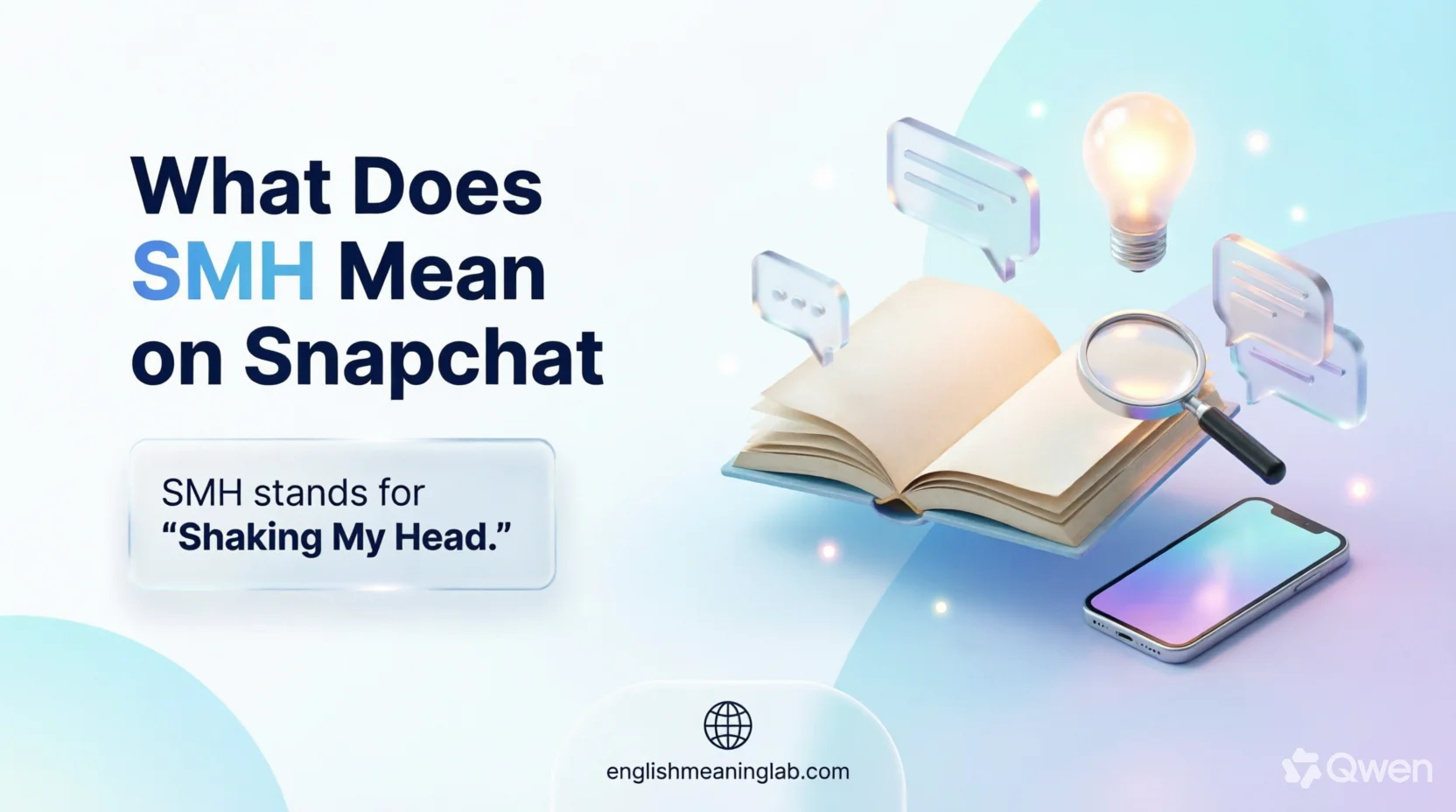
SMH on Snapchat means “Shaking My Head.” It is commonly used to express disappointment, frustration, disbelief, embarrassment, or disapproval about something someone said or did. The abbreviation is most often seen in casual online conversations, chats, comments, and social media interactions where users want to react quickly to a situation.
Meaning & Definition
SMH stands for “Shaking My Head.” The phrase represents the physical action of shaking your head when you disagree with something, find it disappointing, or cannot believe what you have just seen or heard.
In online communication, SMH acts as a reaction rather than a complete statement. It allows users to express emotions without writing a lengthy explanation. Depending on the context, it can communicate frustration, disbelief, annoyance, disappointment, or mild criticism.
For example:
- “You forgot your keys again? SMH.”
- “He posted the wrong answer confidently. SMH.”
- “They canceled the event at the last minute. SMH.”
In each case, the person is expressing dissatisfaction or disbelief toward a situation.
The tone of SMH can vary. Sometimes it is serious and indicates genuine frustration. Other times it is playful and used among friends as a joke. The relationship between the people involved and the surrounding conversation usually determines how the abbreviation should be interpreted.
Because online conversations often lack facial expressions and body language, abbreviations like SMH help communicate emotions more clearly. Readers instantly understand that the sender is reacting negatively or critically to something.
Although SMH is widely recognized across many platforms, Snapchat users frequently use it because quick reactions fit naturally into the app’s communication style. Whether attached to a text message, snap caption, or chat response, the meaning generally remains the same.
Background
The exact moment when SMH first appeared online is difficult to identify with certainty. However, the abbreviation became popular through internet messaging, online forums, chat rooms, and social networking websites.
As digital communication evolved, people began shortening common expressions to save time and make conversations more efficient. Similar abbreviations such as LOL, BRB, and OMG gained popularity for the same reason.
SMH became especially common because it captures a reaction that many people experience regularly. Instead of typing a full sentence explaining disappointment or disbelief, users could simply write three letters.
The rise of smartphones and social media accelerated the spread of internet slang. Platforms focused on short-form communication encouraged the use of abbreviations that quickly conveyed emotions and reactions.
Today, SMH is recognized by many internet users across different age groups. It appears on messaging apps, social networks, discussion platforms, and texting conversations worldwide.
Although its popularity may fluctuate over time as new slang emerges, SMH remains one of the most recognizable reaction-based abbreviations in online communication.
Its continued use reflects a broader trend in digital language: people often prefer quick, expressive shortcuts that communicate feelings efficiently.
Usage in Different Contexts
Chat
In personal chats, SMH is usually used when reacting to something surprising, disappointing, or frustrating.
Examples:
- “You missed the meeting again? SMH.”
- “You stayed up until 4 a.m. on a work night? SMH.”
The sender is expressing disbelief or mild criticism.
Social Media
On social media platforms, SMH often appears in comments, captions, and replies.
Examples:
- “People still believe that rumor? SMH.”
- “Another delay announced today. SMH.”
Here, the abbreviation functions as a public reaction.
Professional Fields
SMH is generally considered informal internet slang and is rarely appropriate in professional communication.
While some coworkers may use it in casual internal chats, it is not commonly used in formal emails, reports, or business documents.
Casual Conversations
Outside social media, people may use SMH in text messages or group chats with friends and family.
The abbreviation works as a quick emotional response and often replaces a longer explanation of disappointment or disbelief.
Meaning in Chat, WhatsApp, Instagram, and TikTok
Although SMH carries the same basic meaning across platforms, the context may vary slightly.
Snapchat
On Snapchat, SMH is often used in direct chats, snap captions, and story replies. Users typically use it to react to something funny, frustrating, embarrassing, or unbelievable.
In WhatsApp conversations, SMH may appear in one-on-one chats or group discussions when reacting to a message or event.
Example:
- “You sent the message to the wrong group? SMH.”
Instagram users often include SMH in comments and replies when responding to posts they find disappointing or surprising.
Example:
- “People are still doing this? SMH.”
TikTok
On TikTok, SMH frequently appears in comment sections where users react to videos, opinions, or trends.
Example:
- “Why would anyone try that? SMH.”
Across all these platforms, the abbreviation remains a quick way to express disapproval, frustration, or disbelief.
Meaning in Physics, Medical, and Aircraft Terminology
Physics
SMH does not have a widely recognized standard meaning in physics. When people use SMH in online conversations, it almost always refers to “Shaking My Head.”
Medical Terminology
There is no universally recognized medical definition of SMH that matches its common social media usage. Medical professionals may use specialized abbreviations within specific contexts, but SMH generally refers to internet slang in everyday communication.
Aircraft or Aviation Terminology
SMH is not commonly recognized as a standard aviation abbreviation. In discussions about aviation, the meaning would depend on a specific organization or technical context rather than the social media interpretation.
Unless the conversation clearly involves a specialized field, SMH should generally be understood as “Shaking My Head.”
Common Misconceptions
Several misunderstandings can occur when people encounter SMH.
One common misconception is that SMH always indicates anger. In reality, it can express anything from mild disappointment to humorous disbelief.
Another misunderstanding is assuming it is an insult. While SMH can be critical, it often reflects a reaction to a situation rather than a direct attack on a person.
Some users also mistake SMH for other internet abbreviations because many acronyms contain similar letters and appear in casual online conversations.
Additionally, context matters. A playful SMH between friends may have a completely different tone from an SMH used during a serious disagreement.
Understanding the surrounding conversation helps determine the intended meaning.
Similar Terms & Alternatives
Several expressions share similarities with SMH.
Facepalm
Facepalm expresses embarrassment, frustration, or disbelief, often in response to a mistake.
OMG
OMG stands for “Oh My God” and usually indicates surprise, shock, or excitement.
Seriously?
This phrase communicates disbelief and is often used in situations where someone might also use SMH.
Sigh
“Sigh” is commonly typed to express disappointment or frustration.
Wow
Depending on tone and context, “Wow” can communicate surprise, disbelief, admiration, or criticism.
Although these expressions overlap with SMH in some situations, each carries its own emotional nuance.
How to Respond to It
The best response depends on why the person used SMH.
If they are joking:
- “I know, right?”
- “That was pretty funny.”
- “I can’t believe it either.”
If they are expressing frustration:
- “Yeah, that situation was disappointing.”
- “I understand why you feel that way.”
- “Hopefully it gets resolved soon.”
If they are reacting to something you did:
- “Fair enough, my mistake.”
- “I know, I should have handled that better.”
- “Lesson learned.”
Responding appropriately requires understanding whether the tone is playful, serious, or critical.
Differences from Similar Words
SMH differs from many related internet expressions.
| Term | Primary Meaning | Typical Tone |
|---|---|---|
| SMH | Disbelief, disappointment, frustration | Critical or disappointed |
| OMG | Surprise or shock | Emotional or excited |
| LOL | Laughter | Humorous |
| Facepalm | Embarrassment or frustration | Self-critical or critical |
| Sigh | Disappointment or exhaustion | Frustrated |
The key difference is that SMH specifically conveys the idea of mentally “shaking your head” at a situation or behavior.
While other expressions may communicate surprise or humor, SMH usually signals disapproval, disbelief, or disappointment.
Relevance in Online Conversations & Dating Apps
SMH remains relevant because online communication often relies on quick emotional reactions.
On social media, users frequently react to posts, comments, news, and trends using short abbreviations. SMH allows people to express their opinions instantly without writing detailed explanations.
Dating apps also feature informal conversations where internet slang is common. Someone might use SMH when discussing an awkward experience, reacting to a surprising message, or joking about a situation.
For example:
- “You forgot my name already? SMH.”
- “Another canceled date. SMH.”
The interpretation often depends on the relationship between the people involved. Among close friends or romantic interests, SMH may be playful. Between strangers, it may appear more critical.
Understanding context is therefore essential when interpreting the abbreviation in modern digital communication.
FAQs
What does SMH mean in text messages?
SMH means “Shaking My Head” in text messages. It is commonly used to express disappointment, disbelief, frustration, or disapproval toward a situation, statement, or action.
What does SMH mean in chat conversations?
In chat conversations, SMH is a reaction that shows the sender finds something surprising, frustrating, embarrassing, or difficult to believe. The exact tone depends on the context.
Is SMH a slang term?
Yes, SMH is considered internet slang. It is widely used in digital communication, including texting, social media, messaging apps, and online discussions.
What does SMH mean on social media?
On social media, SMH typically means “Shaking My Head.” Users often include it in comments, captions, and replies to express disappointment, criticism, or disbelief.
Can SMH have different meanings?
In everyday online communication, SMH almost always means “Shaking My Head.” While specialized industries may use different abbreviations, the social media meaning is the most widely recognized.
How do you respond when someone says SMH?
You should respond based on the context. If they are joking, you can joke back. If they are expressing frustration or disappointment, acknowledge their reaction and continue the conversation naturally.
Is SMH rude?
SMH is not inherently rude. However, it can sometimes sound critical or dismissive depending on how it is used and the relationship between the people communicating.
Why do people use SMH instead of writing a full sentence?
People use SMH because it quickly communicates disappointment, disbelief, or frustration. It saves time while still expressing an emotional reaction clearly.
Conclusion
SMH is one of the most common internet abbreviations used in modern digital communication.
It stands for “Shaking My Head” and is typically used to express disappointment, disbelief, frustration, embarrassment, or disapproval.
Whether you encounter it on Snapchat, WhatsApp, Instagram, TikTok, or in ordinary text messages, the core meaning usually remains the same.
The abbreviation has become popular because it provides a quick and efficient way to react to situations without typing lengthy explanations.
Although it is primarily used in casual online conversations, its tone can range from playful and humorous to serious and critical depending on the context.
Understanding the surrounding message is the best way to interpret SMH accurately. By recognizing how and where it is used, you can better understand online conversations and respond appropriately whenever the abbreviation appears in your chats or social media interactions.