Have you received 🫠🫠🫠 from a girl and wondered what she is trying to tell you? These melting-face emojis can communicate feelings that are difficult to express with words.
Depending on the conversation, they may suggest embarrassment, awkwardness, nervousness, feeling overwhelmed, or trying to stay calm in an uncomfortable situation.
The 🫠🫠🫠 meaning from a girl depends on what you were talking about, how she usually texts, and the relationship you share. If you complimented her, she might be feeling shy or flattered.
If you made a joke, she could be laughing awkwardly or reacting to something embarrassing. If you are flirting, the emojis might communicate nervous excitement, playful embarrassment, or a feeling she does not know how to express directly.
Seeing three melting faces instead of one can make the reaction feel stronger or more dramatic. However, it does not automatically mean she likes you romantically. Understanding the context will help you interpret her message more accurately.
Quick Answer
When a girl sends 🫠🫠🫠, she is usually expressing embarrassment, awkwardness, nervousness, feeling overwhelmed, or playful frustration. In flirting or romantic conversations, the emojis can suggest that she feels shy or flattered by something you said. Using three melting faces often emphasizes her reaction, but the exact meaning depends on your conversation and relationship.
1. Meaning and Definition of 🫠🫠🫠
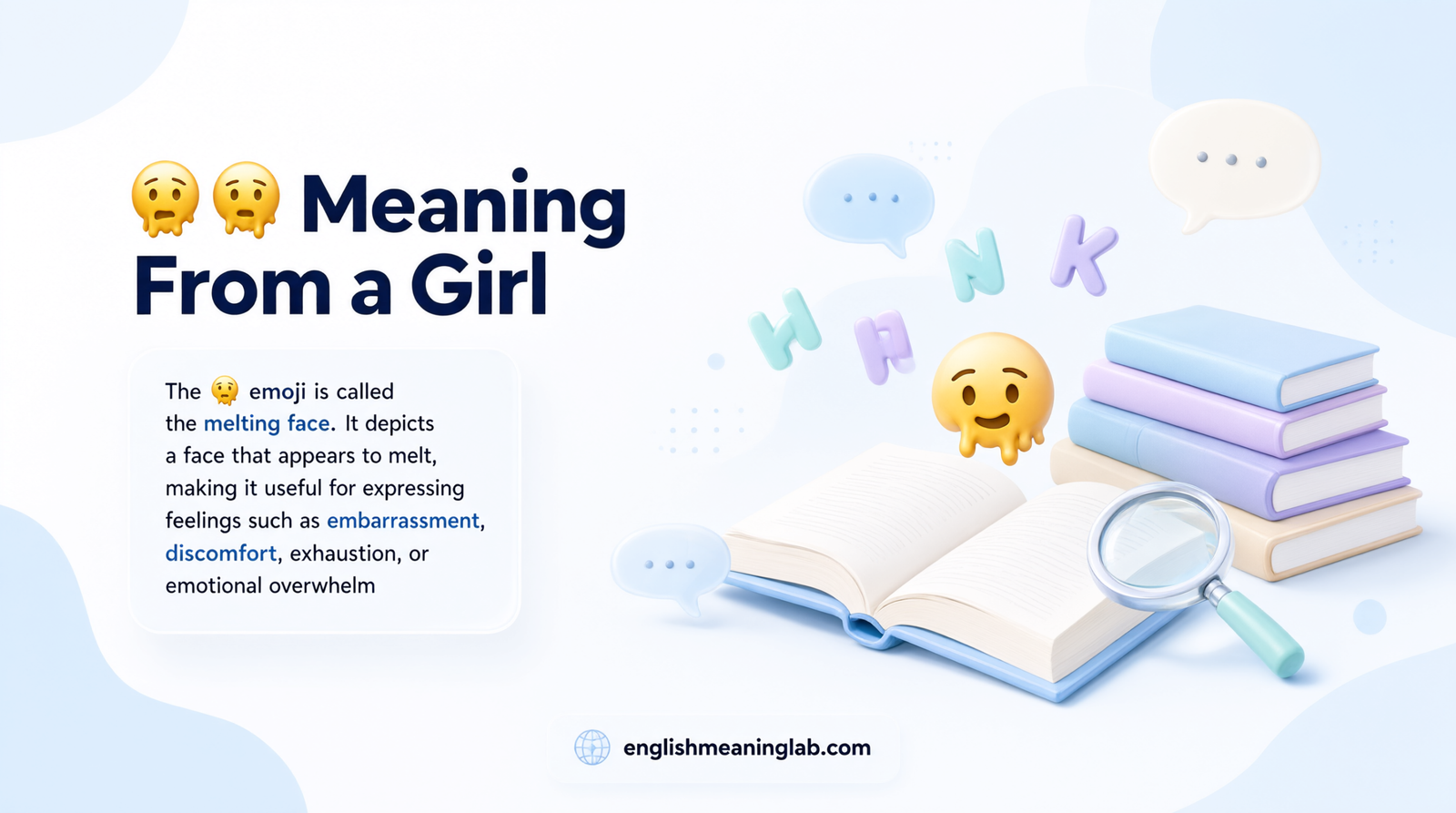
The 🫠 emoji is called the melting face. It depicts a face that appears to melt, making it useful for expressing feelings such as embarrassment, discomfort, exhaustion, or emotional overwhelm.
When a girl sends 🫠🫠🫠, she may be using the repeated emojis to emphasize a reaction that feels intense, funny, awkward, or difficult to put into words.
What does the melting-face emoji represent?
The emoji can communicate several different emotions.
- Embarrassment: She might feel awkward after saying something personal or making a mistake.
- Shyness: She could be reacting to a compliment or a flirtatious message.
- Awkwardness: Something in the conversation might leave her unsure how to respond.
- Overwhelm: She may feel emotionally overloaded by a situation.
- Frustration: She could be reacting to an annoying or uncomfortable experience.
- Playful humor: She might be exaggerating her reaction to something funny.
For example, imagine you tell her, “You looked really beautiful today.”
She replies:
“Stoppp 🫠🫠🫠”
This could mean that she feels flattered, shy, or playfully embarrassed by your compliment.
Now imagine she says:
“I forgot about the assignment and it’s due in an hour 🫠🫠🫠”
In this case, the emojis probably express stress or panic rather than romantic feelings.
Why does she send three melting emojis?
Repeating an emoji often adds emphasis. One melting face might communicate mild awkwardness, while three can make the reaction seem more dramatic, expressive, or humorous.
For example:
- “🫠” — A simple reaction that may suggest awkwardness or emotional discomfort.
- “🫠🫠” — A stronger or more expressive reaction.
- “🫠🫠🫠” — An exaggerated reaction that might communicate intense embarrassment, nervousness, or playful overwhelm.
These interpretations are not fixed rules. Some people repeat emojis simply because they enjoy the visual effect or want their message to feel more expressive.
Does it mean she likes you?
It might, especially if the emojis appear after a compliment, flirtatious remark, or personal conversation. However, the emojis alone cannot confirm romantic interest.
Pay attention to her words, the tone of the conversation, and whether she regularly initiates contact or shows interest in you. These details offer more useful clues than the emojis by themselves.
2. Background: How the Melting-Face Emoji Became Popular
The melting-face emoji is part of the wider language of digital communication, where people use pictures and symbols to express emotions that might otherwise require several sentences.
The symbol was introduced as part of Unicode Emoji 14.0 in 2021. Its visual design makes it suitable for describing literal melting as well as figurative feelings, such as embarrassment, discomfort, or being emotionally overwhelmed.
Why people use melting-face emojis
Online conversations lack many of the cues people rely on when speaking face-to-face. A text message does not automatically communicate facial expressions, tone of voice, or body language.
Emojis help fill that gap.
For example, the sentence “That was embarrassing” sounds direct, while “That was embarrassing 🫠” can feel more humorous or self-aware.
The melting face allows people to communicate discomfort without making the conversation overly serious.
How repeated emojis became a texting habit
Repeating emojis is a common way to intensify digital expressions. People may send several hearts to communicate affection, multiple laughing faces to emphasize amusement, or repeated melting faces to exaggerate their reaction.
The number of emojis does not have a universal meaning. Three melting faces do not automatically indicate three times as much embarrassment or a particular romantic feeling.
Instead, repetition often adds personality and emphasis.
Why girls may use 🫠🫠🫠 in personal conversations
In personal chats, the melting face can be useful when someone feels awkward but wants to keep the interaction lighthearted.
For instance, a girl might send it after receiving an unexpected compliment, remembering an embarrassing moment, or realizing she has revealed something personal.
She might also use it when she is tired, stressed, or amused by a situation.
The important point is that the emoji does not have one fixed emotional interpretation. Its meaning develops through how people use it in everyday communication.
When trying to understand a particular message, consider the words that came before it rather than relying on a general internet interpretation.
3. Usage in Different Contexts
The meaning of 🫠🫠🫠 can change significantly depending on the conversation. It may express romantic shyness in one situation and frustration in another.
In text messages
In ordinary texting, the melting-face emoji often communicates an emotional reaction.
Example:
You: “I can’t stop thinking about our conversation yesterday.”
Her: “Omg 🫠🫠🫠”
She might feel shy, flattered, or unsure what to say. If you have been flirting, the response may be playful.
However, if you are discussing a stressful situation, the same emojis might express feeling overwhelmed.
On social media
On social media, girls may use the melting face in captions, comments, and replies to communicate embarrassment, exhaustion, or amusement.
Example:
“Why did I say that in front of everyone 🫠🫠🫠”
This suggests that the person feels embarrassed about something that happened.
A comment such as “He’s actually so cute 🫠🫠🫠” may communicate attraction or playful excitement.
In professional settings
The melting-face emoji is informal and is generally more suitable for personal messages than formal workplace communication.
Someone might use it in a casual team chat after making a small mistake or facing a deadline.
For example:
“Just realized I sent the wrong attachment 🫠”
The emoji softens the message and communicates embarrassment or discomfort.
In formal emails, reports, or professional documents, it is usually clearer to explain the situation in words.
In casual conversations
Among friends, the melting face can communicate almost any situation where someone feels awkward, tired, or overwhelmed.
Examples include:
- “I waved back at someone who wasn’t waving at me 🫠🫠🫠”
- “I stayed up all night again 🫠”
- “Why is everyone looking at me 🫠🫠🫠”
These examples show that the emoji does not necessarily involve romance.
In flirting and romantic conversations
When a girl sends three melting faces after you flirt with her, she might be trying to communicate shyness, attraction, or playful embarrassment.
For example:
You: “Your smile is honestly my favorite thing.”
Her: “You’re making me shy 🫠🫠🫠”
Her words suggest that she feels flattered or shy. The emojis reinforce that reaction.
Still, a single emoji response is not enough to determine how serious her feelings are.
4. 🫠🫠🫠 Meaning in Chat, WhatsApp, Instagram, and TikTok
The melting-face emoji generally carries similar emotional meanings across messaging platforms. However, the surrounding conversation, the platform’s communication style, and the relationship between users can influence its interpretation.
Meaning in chat
In a private chat, 🫠🫠🫠 often communicates an immediate emotional reaction.
For example:
You: “I think you’re really cute.”
Her: “I literally don’t know what to say 🫠🫠🫠”
She may be flattered, shy, or playfully overwhelmed by the compliment.
If she sends the emojis after a frustrating story, however, they may indicate that she feels defeated or uncomfortable.
Meaning on WhatsApp
On WhatsApp, the emojis may appear in private messages, group chats, or status replies.
Examples:
- “My mom just showed everyone my childhood photos 🫠🫠🫠”
- “You actually remembered that? 🫠”
- “I have so much work tomorrow 🫠🫠🫠”
The first suggests embarrassment, the second may indicate being touched or flattered, and the third likely communicates stress.
The context determines the intended feeling.
Meaning on Instagram
On Instagram, a girl might use 🫠🫠🫠 in direct messages, story replies, or comments.
For example, if you compliment her picture and she responds with three melting faces, she may feel flattered or playfully embarrassed.
If she comments on a celebrity’s picture with the same emojis, they might communicate attraction or admiration.
Neither situation proves romantic interest in the person receiving the message. Social media users often use emojis dramatically or playfully.
Meaning on TikTok
On TikTok, the melting-face emoji can appear in video comments, captions, and messages about relatable or embarrassing situations.
Examples:
- “When he looks at you and you forget how to speak 🫠🫠🫠”
- “Me remembering what I said five years ago 🫠”
- “This is too cute, I can’t 🫠🫠🫠”
The first may describe romantic nervousness, while the other examples express embarrassment or emotional overwhelm.
Does the platform change the meaning?
Usually, the core meaning stays the same. WhatsApp, Instagram, and TikTok do not give the melting-face emoji a separate official romantic definition.
A private message may provide more personal context, while a public comment might be exaggerated or intended as humor. Interpret the message based on the actual conversation rather than assuming that every platform uses the emoji differently.
5. Meaning in Physics, Medical, and Aircraft Terminology
The 🫠🫠🫠 sequence is an emoji expression rather than a standard technical abbreviation. Its everyday emotional meaning should not be confused with terminology used in scientific or professional fields.
In physics
The melting-face emoji is not a recognized physics symbol or standard technical notation.
Physics uses terms such as melting to describe a physical change in which a solid becomes a liquid under appropriate conditions. However, the emoji itself is not a scientific symbol for melting, temperature, or a particular physical quantity.
If it appears in a physics discussion, it is likely being used informally to express a reaction rather than to define a scientific concept.
In medical terminology
The melting-face emoji does not have a standardized medical meaning or serve as a medical diagnosis.
Someone might use it informally when discussing exhaustion, stress, or feeling overwhelmed, but that does not establish a clinical condition.
For example, “I’ve been studying all night 🫠🫠🫠” is a casual expression of tiredness, not a medical assessment.
In aircraft and aviation terminology
The melting-face emoji is not a standard aviation symbol or a recognized aircraft abbreviation.
Aviation uses specialized terminology, symbols, and codes to communicate information about aircraft, procedures, weather, and operations. The emoji does not have a universal technical definition in these contexts.
If it appears in an informal conversation among aviation enthusiasts, its meaning is likely emotional or humorous.
Why context matters
The same word or symbol can be interpreted differently depending on the subject. In a personal message, 🫠🫠🫠 usually expresses an emotional reaction. In a technical document, it should not be treated as a formal scientific or professional term.
For this emoji combination, the most useful interpretation generally comes from everyday conversation rather than technical terminology.
6. Common Misconceptions About 🫠🫠🫠
The melting-face emoji is expressive, but its flexibility can lead to misunderstandings.
Misconception 1: It always means she has a crush on you
A girl may send 🫠🫠🫠 after a flirtatious message, but the emoji does not automatically mean she has romantic feelings.
She could be embarrassed, amused, overwhelmed, or unsure how to respond.
Look at the full conversation before assuming she likes you.
Misconception 2: Three emojis mean she likes you three times more
Repeating an emoji generally adds emphasis, but there is no universal scale that connects the number of emojis to the intensity of someone’s feelings.
Three melting faces may simply be her preferred texting style.
Misconception 3: It always means embarrassment
Embarrassment is one possible interpretation, but the emoji can also communicate exhaustion, awkwardness, frustration, nervous excitement, or emotional overwhelm.
For example, someone dealing with a stressful deadline might use it to express feeling overwhelmed rather than feeling shy.
Misconception 4: It means she is literally melting
In ordinary texting, the melting face is usually figurative. It communicates a reaction rather than a literal physical event.
When a girl says, “You’re too cute 🫠🫠🫠,” she is likely using the emoji to express a strong reaction to something she finds adorable.
Misconception 5: It is always a positive response
The emoji can be playful or affectionate, but it may also communicate discomfort, frustration, or awkwardness.
If you made a joke that upset someone, three melting faces might indicate that the situation feels uncomfortable rather than that she is flirting.
Pay attention to her words and whether she seems comfortable continuing the conversation.
Misconception 6: You must respond with the same emoji
You do not need to copy her emoji style. A simple message, a funny response, or a thoughtful question may be more natural.
The goal is to respond to the emotion she appears to express, not to match the exact number of symbols she sends.
7. Similar Emojis and Alternatives
Several emojis can communicate emotions similar to 🫠🫠🫠, but their meanings are not identical.
| Emoji | Common interpretation | Difference from 🫠 |
|---|---|---|
| 🥹 | Feeling touched, emotional, or close to tears | More focused on tenderness or emotional vulnerability |
| 😳 | Shock, surprise, or embarrassment | Often signals an immediate startled reaction |
| 😭 | Crying, intense emotion, or exaggerated laughter | Usually more dramatic or visibly emotional |
| 🥰 | Affection, warmth, or feeling loved | More clearly positive and affectionate |
| 😅 | Nervous laughter or awkward relief | Often suggests laughing off discomfort |
| 🫣 | Shyness, nervous curiosity, or wanting to hide | Emphasizes hiding or peeking at a situation |
| 😵💫 | Confusion, dizziness, or feeling overwhelmed | Often suggests disorientation or mental overload |
| 🥵 | Heat, intense effort, or attraction | Can express feeling hot or finding someone attractive |
🫠 vs. 🥹
The melting face may communicate embarrassment or feeling overwhelmed, while 🥹 often expresses being touched, moved, or emotionally vulnerable.
If a girl sends 🫠 after a compliment, she might be feeling shy. If she sends 🥹 after you do something thoughtful, she might be touched by your kindness.
🫠 vs. 😳
The flushed face often communicates sudden embarrassment, surprise, or shock.
The melting face can express a similar awkward feeling, but it often has a more exaggerated or resigned tone.
For example, 😳 may suggest, “I wasn’t expecting that!” while 🫠 might suggest, “I can’t handle this right now.”
🫠 vs. 🥰
The smiling face with hearts is more directly associated with affection, warmth, and feeling loved.
The melting face is more ambiguous. It may accompany affection, but it can also express stress or embarrassment.
Therefore, 🥰 may communicate positive affection more clearly, while 🫠 needs more context.
🫠 vs. 😭
The loudly crying face can represent sadness, intense laughter, frustration, or exaggerated emotion.
The melting face often conveys a quieter sense of awkwardness, discomfort, or emotional overwhelm. Both can be used humorously, depending on the conversation.
8. How to Respond When a Girl Sends 🫠🫠🫠
The best response depends on what you said before she sent the emojis. Instead of assuming she is flirting, respond naturally to the apparent emotion.
If she sends them after a compliment
If you complimented her and she responds with 🫠🫠🫠, she might feel flattered or shy.
You could reply:
- “Haha, did I make you shy? 😄”
- “I’m just being honest.”
- “You don’t have to be embarrassed.”
- “I meant every word.”
Keep the tone friendly and respectful. If she seems uncomfortable, avoid pushing the conversation toward flirting.
If she sends them while flirting
If you are already exchanging playful or romantic messages, you can respond with lighthearted confidence.
Examples:
- “Why are you melting? 😂”
- “Should I take that as a compliment?”
- “You’re cute when you react like that.”
- “Okay, I’ll stop teasing you… maybe.”
These responses work best when you already share a comfortable, playful dynamic.
If she sends them after an embarrassing moment
If she is talking about a mistake or awkward situation, humor or reassurance may be more helpful than flirting.
Examples:
- “Don’t worry, it happens to everyone.”
- “Honestly, that’s kind of funny 😂”
- “I would have done the same thing.”
- “You’ll laugh about it later.”
Choose your response based on whether she seems amused or genuinely upset.
If she seems overwhelmed
If she sends the emojis while discussing school, work, or personal problems, acknowledge what she is going through.
Examples:
- “That sounds like a lot to deal with.”
- “Take a breath, you’ve got this.”
- “Want to talk about it?”
- “Hope things get easier soon.”
The melting face can be a humorous way of communicating stress, but it can also accompany genuine frustration.
If you cannot tell what she means
You can simply ask a light question.
For example:
“Wait, is that a shy melting face or a stressed melting face? 😂”
This gives her an easy way to clarify the meaning without making the interaction awkward.
9. Differences Between 🫠🫠🫠 and Similar Expressions
Understanding the difference between the melting face and other emotional expressions can help you read the tone of a message more accurately.
Melting face vs. blushing
Blushing usually suggests embarrassment, shyness, or being flattered. The melting face can communicate those feelings too, but it has a wider range of meanings.
A blushing reaction may appear more directly connected to shyness, while a melting face can also suggest that someone feels overwhelmed or cannot handle a situation.
Melting face vs. nervous laughter
Nervous laughter is often used to soften an awkward moment. The melting face can achieve a similar effect, especially when someone wants to acknowledge discomfort without taking the situation too seriously.
For example:
“Sorry, that came out wrong 😅”
“I can’t believe I said that 🫠🫠🫠”
Both express awkwardness, but the emotional style differs.
Melting face vs. a heart emoji
A heart emoji usually expresses affection, love, appreciation, or support. The melting face is more ambiguous and often emphasizes a reaction.
If a girl sends 🫠❤️, the combination may communicate affectionate embarrassment or being emotionally overwhelmed in a positive way. However, the heart does not automatically confirm romantic interest.
Melting face vs. saying “I’m shy”
The words “I’m shy” directly communicate shyness. The melting face leaves more room for interpretation.
If a girl writes, “I’m actually shy 🫠🫠🫠,” her words provide a clear explanation of the emoji. If she sends only the emojis, you need to consider the preceding conversation to understand what she means.
Why the distinction matters
Emojis communicate tone rather than providing precise definitions of a person’s feelings. Two people may use the same symbol differently, even in similar situations.
The safest approach is to interpret the overall message, not just the visual symbol.
10. 🫠🫠🫠 Meaning in Online Conversations and Dating Apps
When a girl sends three melting faces in a romantic conversation, she may be expressing nervous excitement, embarrassment, or a playful reaction to flirting. On dating apps, the emoji can make a response feel more expressive without requiring a long explanation.
However, its meaning depends on the stage of the interaction and the words surrounding it.
When a girl sends 🫠🫠🫠 after flirting
Suppose you tell her:
“You have the prettiest smile.”
She replies:
“Stoppp 🫠🫠🫠”
She may feel flattered, shy, or amused by your compliment. If she continues the conversation enthusiastically, that may suggest she enjoys the interaction.
Still, the emoji alone cannot confirm attraction.
When a girl sends it after you tease her
If you make a playful comment and she responds with three melting faces, she might be pretending to feel overwhelmed or embarrassed.
For example:
You: “You definitely smiled when you saw my message.”
Her: “You’re so annoying 🫠🫠🫠”
Depending on your existing dynamic, this could be playful teasing rather than genuine irritation. If her words become serious or she asks you to stop, respect that boundary instead of assuming she is flirting.
When a girl sends it on a dating app
On a dating app, the melting face may appear after a compliment, a funny opening line, or a conversation about attraction.
It can make a message feel lighthearted and expressive. However, it is not a formal signal that she wants a relationship, a date, or further romantic involvement.
Look at whether she asks questions, responds thoughtfully, and shows interest in continuing the conversation.
When she sends three melting faces without words
A message containing only 🫠🫠🫠 is particularly dependent on context.
If you just sent a flirtatious message, she might be feeling shy or flattered. If you shared embarrassing news, she might be reacting with awkwardness. If you discussed a stressful situation, she may feel overwhelmed.
You can respond with a gentle question or a playful comment that fits the situation.
Does 🫠🫠🫠 mean she likes you?
It can accompany romantic interest, but it is not reliable proof of attraction. Consider the broader pattern: whether she initiates conversations, asks about you, responds warmly, and seems interested in spending time together.
The emoji is one small part of the conversation. Her words, actions, and comfort level matter much more when interpreting her feelings.
FAQs
1. What does 🫠🫠🫠 mean from a girl in text?
When a girl sends 🫠🫠🫠 in a text, she may be expressing embarrassment, awkwardness, nervousness, or feeling overwhelmed. If the message follows a compliment or flirtatious comment, she could be feeling shy or flattered. If the conversation concerns stress or an embarrassing situation, the emojis may communicate discomfort instead.
2. Does 🫠🫠🫠 mean a girl has a crush on you?
Not necessarily. Three melting-face emojis can accompany flirting or romantic nervousness, but they can also express embarrassment, frustration, or humor. If you want to understand whether she likes you, consider how she communicates with you overall rather than relying on one emoji response.
3. Why would a girl send three melting-face emojis instead of one?
Sending three melting faces often emphasizes an emotion or makes a reaction more dramatic. She might be exaggerating her embarrassment, showing playful excitement, or expressing that she feels overwhelmed. There is no fixed rule for the number of emojis, so three do not automatically indicate stronger romantic feelings than one.
4. What does 🫠🫠🫠 mean after a compliment?
After a compliment, 🫠🫠🫠 may suggest that a girl feels flattered, shy, embarrassed, or playfully overwhelmed. For example, she might use it when she does not know how to respond to a sweet message. It can be a positive reaction, but the emoji alone cannot confirm romantic interest.
5. How should I reply when a girl sends 🫠🫠🫠?
Respond according to the conversation. If you were flirting, you could say, “Haha, did I make you shy?” If she is embarrassed about something, offer reassurance. If she seems stressed, ask whether she wants to talk. A natural response is usually better than assuming the emojis have a specific romantic meaning.
6. What does 🫠🫠🫠 mean on WhatsApp or Instagram?
On WhatsApp and Instagram, three melting faces can express embarrassment, awkwardness, nervous excitement, frustration, or emotional overwhelm. After a romantic compliment, they may suggest shyness or being flattered. In a conversation about an embarrassing mistake, they are more likely to express discomfort or humorous self-consciousness.
7. Is 🫠🫠🫠 a flirting emoji?
The melting-face emoji can be used for flirting, particularly when someone feels shy or flattered by a romantic message. However, it is not exclusively a flirting emoji. People also use it to communicate stress, awkwardness, exhaustion, or humorous embarrassment in ordinary conversations.
8. What is the difference between 🫠 and 😳 when a girl texts you?
The 😳 emoji often expresses surprise, shock, or sudden embarrassment, while 🫠 can suggest feeling overwhelmed, awkward, shy, or unable to handle a situation. Both can appear during flirting, but neither has a guaranteed romantic meaning. The surrounding message is the best clue to what she intends.
Conclusion
The 🫠🫠🫠 emoji combination is an expressive way for a girl to communicate embarrassment, awkwardness, nervousness, frustration, or feeling overwhelmed. In romantic conversations, it can suggest that she feels shy or flattered by a compliment, especially when the surrounding messages are playful or flirtatious.
Using three melting faces often makes a reaction more dramatic, but the number does not have a fixed meaning. The same emojis might express romantic nervousness in one conversation and stress or embarrassment in another.
If a girl sends you these emojis, pay attention to what you said before her response, how she normally communicates, and whether the conversation feels comfortable and mutual. You can reply playfully if you are flirting, offer reassurance if she feels embarrassed, or ask a gentle question if you are unsure.
Most importantly, do not treat 🫠🫠🫠 as definite proof that she likes you. Emojis provide clues about tone, but understanding someone’s feelings requires looking at the broader conversation and respecting what they communicate directly.