Internet slang changes quickly, and many short abbreviations can have different meanings depending on where they are used. One term that often causes confusion is “SOL.”
People frequently encounter it in text messages, online chats, social media posts, gaming communities, and casual conversations. Because it is short and can appear without explanation, many users search for its meaning after seeing it in a message or comment.
In most situations, SOL is used as an informal slang abbreviation that expresses bad luck, disappointment, or an unfortunate situation. However, context matters because the same letters may occasionally represent different phrases in specific communities or industries.
Understanding how SOL is used can help you avoid misunderstandings and respond appropriately in conversations.
Whether you saw it in a text message, on TikTok, in a group chat, or somewhere else online, knowing the common slang meaning makes it much easier to interpret what the sender intended.
Quick Answer
SOL meaning slang most commonly refers to “Sh** Out of Luck,” an informal expression used when someone is in an unfortunate situation or has no good options available. It is most often seen in text messages, online chats, social media discussions, and casual conversations where people are talking about bad luck, disappointment, or a problem with no easy solution.
Meaning & Definition
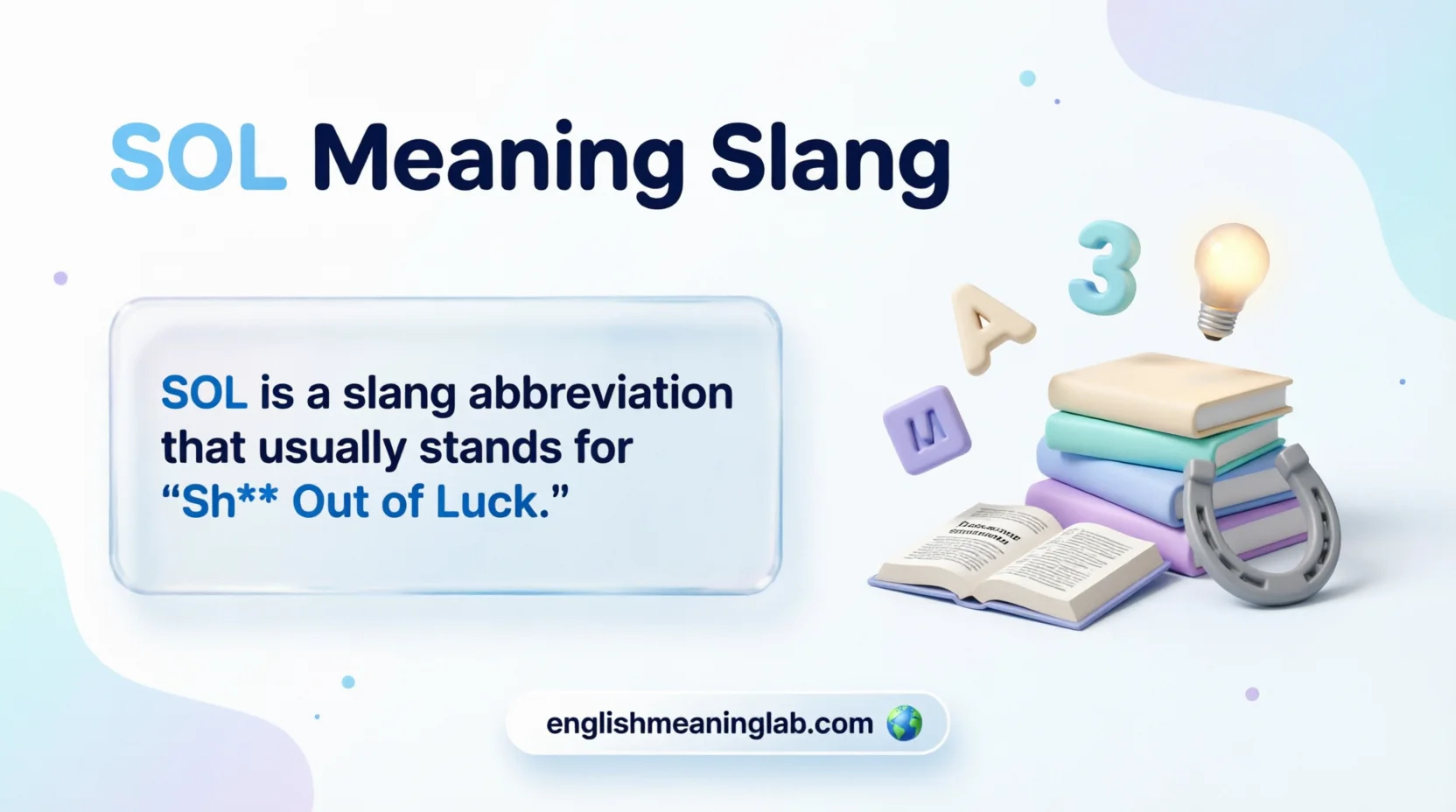
SOL is a slang abbreviation that usually stands for “Sh** Out of Luck.” The expression is used to describe a situation where someone has encountered a problem and has few or no favorable options remaining.
The phrase is generally not meant to be taken literally. Instead, it communicates frustration, disappointment, or acceptance that a situation has turned out badly. Depending on the tone of the conversation, it can be serious, humorous, sarcastic, or lighthearted.
For example:
- “The tickets sold out already, so we’re SOL.”
- “My phone died and I forgot my charger. I’m SOL.”
- “If the store closes before we get there, we’re probably SOL.”
In each example, the speaker is expressing that circumstances are unfavorable and there may not be an easy solution.
Because the abbreviation contains a shortened form of a mild profanity, some people may avoid using it in formal environments. However, it is widely recognized in casual online communication.
The exact tone depends on context. Friends may use it jokingly, while others may use it to express genuine frustration. Understanding the surrounding conversation is important when interpreting the meaning.
Background
SOL has been used in informal English for many years and became even more common as digital communication expanded. Like many abbreviations, it gained popularity because it allows people to communicate quickly without typing a longer phrase.
The underlying expression existed before widespread internet use. As texting, instant messaging, and online forums became popular, shortened versions such as SOL naturally spread because they were convenient and easy to recognize.
Although the phrase is widely understood in many English-speaking online communities, its exact origin is not always discussed when people use it. Most users simply recognize it as a common abbreviation for being unlucky or stuck in an unfavorable situation.
Over time, SOL became part of internet culture and is now found across social media platforms, gaming communities, discussion forums, and everyday text conversations.
Today, many people use it casually without thinking about the original expanded phrase. Some younger users may know the abbreviation’s meaning while rarely hearing the full expression spoken aloud.
Its continued popularity comes from its simplicity. Three letters quickly communicate frustration, disappointment, or a lack of options, making it useful in fast-moving online conversations.
Usage in Different Contexts
Chat
In private chats, SOL usually indicates that something has gone wrong or that someone is out of options.
Example:
- “I forgot my password and can’t access the account. I’m SOL.”
The speaker is expressing frustration and acknowledging a difficult situation.
Social Media
On social media, SOL often appears in comments, reactions, memes, and discussions about everyday problems.
Example:
- “Missed the sale by five minutes. SOL, I guess.”
In these situations, the term often carries a humorous or self-deprecating tone.
Professional Fields
SOL is generally uncommon in professional communication because it is informal and may be considered inappropriate in some workplaces.
In professional settings, people are more likely to use alternatives such as:
- Out of options
- No solution available
- Unfortunate situation
- Limited choices
If SOL appears in a workplace message, the writer is usually communicating informally.
Casual Conversations
Among friends and family, SOL is commonly used to describe bad luck.
Example:
- “The restaurant is fully booked tonight, so we’re SOL.”
Here, the phrase simply means the desired outcome is no longer possible.
Meaning in Chat, WhatsApp, Instagram, and TikTok
On WhatsApp, SOL is commonly used in everyday conversations between friends.
Example:
- “I lost my wallet before the trip. I’m SOL now.”
The sender is expressing concern or frustration.
On Instagram, SOL may appear in captions, comments, stories, or replies.
Example:
- “Missed the concert tickets again. SOL.”
The tone is often casual and relatable.
TikTok
TikTok users frequently use abbreviations to keep captions and comments short. SOL may be used when discussing a mistake, missed opportunity, or unfortunate event.
Example:
- “When you study the wrong chapter for the test and realize you’re SOL.”
Online Messaging
Across messaging platforms, the meaning remains largely consistent. It typically communicates that someone is unlucky, stuck, or facing an unfavorable outcome.
Because internet slang evolves, users should always consider surrounding context before assuming a meaning.
Meaning in Physics, Medical, and Aircraft Terminology
Physics
SOL does not have a universally recognized physics meaning that matches the common slang definition. If the abbreviation appears in a physics-related discussion, it may refer to a specialized term specific to that context rather than internet slang.
Medical Terminology
SOL can appear as an abbreviation in some medical contexts, but those meanings are separate from the slang usage. Medical abbreviations vary by organization and specialty, so the intended meaning should always be determined from the professional context.
Aircraft or Aviation Terminology
SOL is not widely recognized as a standard aviation slang term meaning “Sh** Out of Luck.” If it appears in aviation materials, it may represent a context-specific abbreviation unrelated to internet slang.
When encountering SOL in technical fields, readers should avoid assuming the slang meaning and instead examine the surrounding context.
Common Misconceptions
One common misunderstanding is assuming SOL always has the same meaning everywhere. While the slang interpretation is widespread online, abbreviations often have different meanings in specialized fields.
Another misconception is believing the phrase is always offensive. Although it contains a shortened profanity, many people use the abbreviation casually without intending strong language.
Some users also assume SOL is used only when a situation is hopeless. In reality, it can simply describe temporary inconvenience or mild disappointment.
People occasionally confuse SOL with other internet abbreviations because short acronyms often look similar. This is why context remains essential when interpreting the term.
Similar Terms & Alternatives
Several expressions convey a similar idea:
- Out of luck – A direct and less informal alternative.
- Tough luck – Used when something unfortunate happens.
- No chance – Indicates an unlikely outcome.
- Out of options – Focuses on limited choices.
- Too late – Often used when an opportunity has already passed.
- That’s unfortunate – A more formal expression.
These alternatives vary in tone, but all can communicate disappointment or an unfavorable situation.
How to Respond to It
Your response should match the situation and tone of the conversation.
If someone is genuinely frustrated:
- “That really sucks. Hope you figure it out.”
- “Sorry to hear that.”
- “Maybe there’s another option.”
If the situation is minor or humorous:
- “That’s unfortunate!”
- “Better luck next time.”
- “Hopefully things work out.”
If you need clarification:
- “What happened?”
- “Why are you SOL?”
- “Is there any way to fix it?”
A thoughtful response helps keep the conversation moving naturally.
Differences from Similar Words
SOL vs Out of Luck
Both mean nearly the same thing. SOL is simply the abbreviated slang version.
SOL vs Tough Luck
“Tough luck” is often directed at another person, while SOL is frequently used to describe one’s own situation.
SOL vs No Chance
“No chance” focuses on probability, while SOL emphasizes being stuck or unfortunate.
SOL vs Unlucky
“Unlucky” describes a person or event, whereas SOL describes the overall situation and lack of favorable options.
Understanding these differences can help users choose the most appropriate expression.
Relevance in Online Conversations & Dating Apps
SOL remains relevant because modern communication favors short, efficient expressions. People use it in messaging apps, social platforms, gaming communities, and online discussions.
In dating apps, someone might use SOL when talking about a missed opportunity or an unfortunate situation.
Examples:
- “My phone died before I could reply, so I was SOL.”
- “The venue was fully booked, so we’re SOL for tonight.”
The interpretation often depends on the relationship between the people communicating. Close friends may use the term casually and humorously, while strangers may use it more literally.
Because online conversations often lack vocal tone and facial expressions, readers should consider context carefully before drawing conclusions about the sender’s intent.
FAQs
What does SOL mean in text?
SOL usually means “Sh** Out of Luck.” It is used to describe an unfortunate situation where someone has limited options or bad luck.
What does SOL mean in chat?
In chat conversations, SOL typically indicates frustration, disappointment, or being stuck in a difficult situation. The tone can be serious or humorous depending on context.
Is SOL a slang term?
Yes, SOL is widely recognized as internet and conversational slang. It is primarily used in informal communication rather than formal writing.
What does SOL mean on social media?
On social media, SOL generally means someone experienced bad luck, missed an opportunity, or encountered a problem with no easy solution.
Can SOL have different meanings?
Yes. While the slang meaning is common online, the abbreviation can represent different terms in technical, professional, or organizational contexts.
How do you respond to SOL?
You can respond with sympathy, encouragement, humor, or follow-up questions depending on the situation. A suitable response depends on the tone of the conversation.
Is SOL considered rude?
SOL is usually considered mildly informal rather than highly offensive. However, some people may avoid it because the expanded phrase contains a profanity.
Why do people use SOL instead of the full phrase?
People use SOL because it is shorter, easier to type, and widely understood in online conversations, text messages, and social media interactions.
Conclusion
SOL is a common slang abbreviation that most often stands for “Sh** Out of Luck.” It is used to express bad luck, disappointment, frustration, or a situation where someone has few remaining options.
The term appears frequently in text messages, chats, social media posts, online forums, and casual conversations because it quickly communicates an unfavorable outcome.
Although the slang meaning is the most widely recognized interpretation, abbreviations can have different meanings in technical or professional contexts. For that reason, understanding the surrounding conversation is always important.
When you see SOL online, the speaker is usually saying that something unfortunate happened or that a desired result is no longer possible.
Whether the tone is serious, sarcastic, or humorous depends on the context. By paying attention to how and where it is used, you can interpret the meaning accurately and respond appropriately in any conversation.