If you spend time texting friends, chatting on social media, or messaging people online, you have probably come across the abbreviation HBU.
Many people search for its meaning because internet slang and texting shortcuts can sometimes be confusing, especially when they appear in casual conversations without any explanation.
Text messaging has encouraged people to communicate faster, leading to the creation of countless abbreviations and acronyms.
HBU is one of these commonly used shortcuts. It appears in personal chats, social media comments, direct messages, and even online dating conversations.
Understanding what HBU means can help you follow conversations more naturally and respond appropriately. Although the abbreviation is simple, its meaning can vary slightly depending on the context and the topic being discussed.
In most situations, however, it serves the same purpose: keeping a conversation flowing and showing interest in the other person’s thoughts, feelings, or experiences.
This guide explains the meaning of HBU, where it comes from, how it is used, and how you can respond when someone sends it to you.
Quick Answer
HBU means “How About You?” in texting and online conversations. People use it after sharing information about themselves to ask for your opinion, experience, feelings, or situation. For example, if someone says, “I’m doing great today, HBU?” they are simply asking, “How about you?”
Meaning & Definition
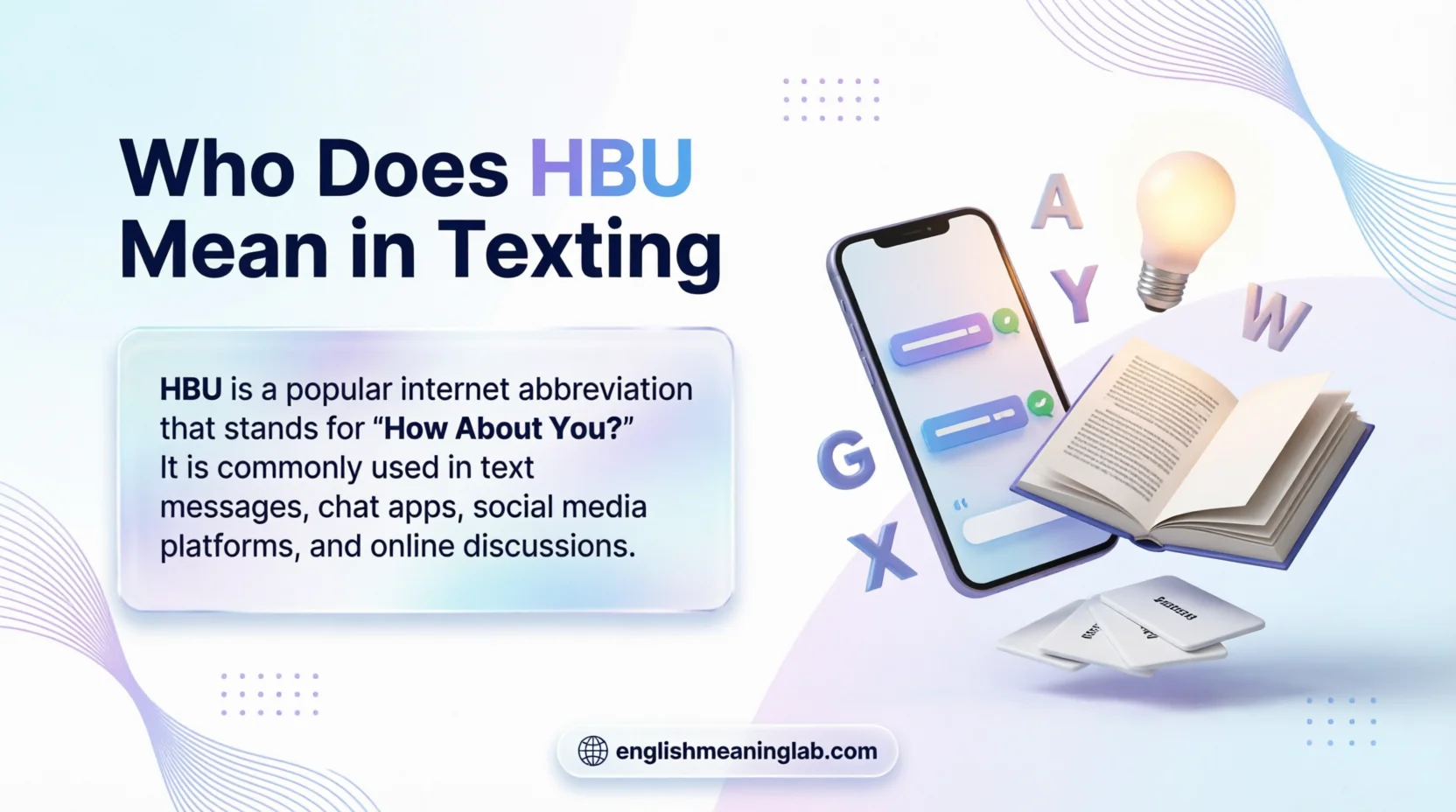
HBU is a popular internet abbreviation that stands for “How About You?” It is commonly used in text messages, chat apps, social media platforms, and online discussions.
The phrase “How About You?” is a conversational question used to turn the focus toward another person. Instead of typing the entire phrase, many people shorten it to HBU to save time and make texting faster.
For example:
- “I love action movies. HBU?”
- “I’m staying home this weekend. HBU?”
- “My favorite color is blue. HBU?”
In each example, the sender shares something about themselves and then asks for your perspective.
HBU is considered a friendly and informal expression. It helps create balanced conversations because it encourages the other person to participate rather than allowing the discussion to become one-sided.
The abbreviation is especially common among teenagers, young adults, social media users, and people who frequently communicate online. However, people of all ages may use it in casual digital conversations.
One reason HBU remains popular is its simplicity. It is short, easy to remember, and instantly understood by most people familiar with internet slang.
While HBU usually means “How About You?”, context still matters. The question could be asking about feelings, preferences, plans, opinions, or experiences depending on the surrounding conversation.
For instance:
- “I’m feeling tired today. HBU?” refers to feelings.
- “I prefer coffee over tea. HBU?” refers to preferences.
- “I’m going to the beach tomorrow. HBU?” refers to plans.
Understanding the context helps determine exactly what information the sender wants to know.
Background
The rise of texting and instant messaging played a major role in the popularity of abbreviations like HBU. As mobile phones became more common, users began shortening words and phrases to type messages more quickly.
Early text messaging often had character limits, encouraging people to use abbreviations whenever possible. This led to the creation of shortcuts such as:
- LOL (Laugh Out Loud)
- BRB (Be Right Back)
- IDK (I Don’t Know)
- HBU (How About You?)
Over time, these abbreviations moved beyond SMS and became common on social media platforms, messaging apps, online forums, and gaming communities.
HBU gained popularity because it mirrors a phrase people naturally use in everyday speech. Instead of ending a statement with a period, people often ask another person for their opinion or experience. HBU provides a quick way to do exactly that.
As online communication evolved, the abbreviation became widely recognized. Today, it appears in private conversations, group chats, comments, captions, and direct messages.
Unlike some internet slang that fades quickly, HBU has remained relevant because it fulfills a practical communication need. People constantly ask others for feedback, opinions, and updates, making the phrase useful across many situations.
The abbreviation also reflects an important aspect of communication: showing interest in another person. By asking “How About You?”, the speaker invites participation and keeps the conversation active.
Because of this conversational function, HBU continues to be used across various digital platforms and remains one of the most recognizable texting abbreviations today.
Usage in Different Contexts
Chat Conversations
In everyday chats, HBU is often used to ask about someone’s mood, activities, or opinions.
Example:
- “I’m having a good day. HBU?”
Social Media
Users frequently include HBU in comments and replies to encourage interaction.
Example:
- “My favorite season is winter. HBU?”
Online Communities
In forums and discussion groups, HBU can be used to gather opinions from others.
Example:
- “I’ve been playing this game for years. HBU?”
School and Student Conversations
Students often use HBU when discussing classes, exams, hobbies, or future plans.
Example:
- “I studied math today. HBU?”
Professional Settings
HBU is generally considered informal. In professional communication, people usually write the full phrase “How about you?” instead of using the abbreviation.
For example:
- Informal: “I’m available Friday. HBU?”
- Professional: “I’m available Friday. How about you?”
Although some coworkers may use HBU in casual workplace chats, it is less common in formal emails and business communications.
Meaning in Chat, WhatsApp, Instagram, and TikTok
Chat
In chat applications, HBU usually follows a statement and requests a response.
Example:
- “I like watching documentaries. HBU?”
WhatsApp users often employ HBU in daily conversations with friends and family.
Example:
- “I’m free this evening. HBU?”
On Instagram, HBU may appear in captions, comments, stories, and direct messages.
Example:
- “This was an amazing trip. HBU?”
TikTok
TikTok creators and viewers sometimes use HBU when discussing trends, opinions, or experiences.
Example:
- “This song is stuck in my head. HBU?”
Across all these platforms, the core meaning remains the same: asking another person to share their own perspective.
Meaning in Physics, Medical, and Aircraft Terminology
Physics
There is no widely recognized standard physics abbreviation represented by HBU.
Medical Field
HBU is not commonly used as a standard medical abbreviation in general medical communication. Any specialized usage would depend on a specific organization or document.
Aircraft and Aviation
HBU is not widely known as a standard aviation abbreviation used across the aircraft industry.
Therefore, when most people encounter HBU online, it almost always means “How About You?” rather than a technical term.
Common Misconceptions
Many people misunderstand HBU when they first see it online.
Misconception 1: It Has a Hidden Meaning
Some assume HBU is secret slang. In reality, it usually means the simple phrase “How About You?”
Misconception 2: It Is Romantic
HBU is not automatically romantic. It can be used with friends, family members, coworkers, and strangers.
Misconception 3: It Is Only for Teenagers
Although younger users frequently use HBU, people of all ages may use it in casual digital communication.
Misconception 4: It Is Rude
Some people think abbreviations seem lazy or rude. However, HBU is generally considered polite because it invites the other person into the conversation.
Similar Terms & Alternatives
Several expressions have meanings similar to HBU.
How About You?
The full version of the abbreviation.
What About You?
Another common alternative with nearly identical meaning.
And You?
A shorter phrase often used after discussing your own situation.
Your Thoughts?
Used when asking for opinions.
What Do You Think?
More direct and commonly used in discussions.
How’s It Going for You?
Often used when asking about someone’s current situation.
The best alternative depends on the tone and context of the conversation.
How to Respond to It
Responding to HBU is usually simple because the sender is asking about you.
Examples:
If Asked About Your Day
Them: “I’m doing well today. HBU?”
You: “I’m doing great too. Thanks for asking.”
If Asked About Preferences
Them: “I prefer pizza. HBU?”
You: “I like burgers more.”
If Asked About Plans
Them: “I’m going out tonight. HBU?”
You: “I’m staying home and watching movies.”
A good response answers the question and can also keep the conversation going by asking another question.
Differences from Similar Words
HBU vs WBU
Both often mean “How About You?” or “What About You?” and are used similarly.
HBU vs WYD
- HBU = How About You?
- WYD = What Are You Doing?
The meanings are completely different.
HBU vs IDK
- HBU asks a question.
- IDK means “I Don’t Know.”
HBU vs HMU
- HBU asks for information.
- HMU means “Hit Me Up,” which is an invitation to contact someone.
Understanding these differences helps prevent confusion during online conversations.
Relevance in Online Conversations & Dating Apps
HBU plays an important role in online conversations because it encourages engagement. Rather than focusing only on one person, it invites the other participant to contribute.
On dating apps, HBU is commonly used when getting to know someone.
Examples:
- “I enjoy traveling. HBU?”
- “I’m a big fan of coffee. HBU?”
- “I usually spend weekends outdoors. HBU?”
In these situations, HBU helps people discover shared interests and maintain a natural flow of conversation.
Because it shows curiosity about another person’s thoughts and experiences, it can make interactions feel more friendly and engaging.
However, relying on HBU too often may make conversations feel repetitive. Meaningful follow-up questions usually create deeper and more interesting discussions.
FAQs
What does HBU mean in texting?
HBU stands for “How About You?” It is used to ask another person about their opinion, feelings, plans, or experiences.
What does HBU mean in chat?
In chat conversations, HBU is a quick way of asking the other person for their response after sharing your own information.
Is HBU a slang term?
HBU is generally considered an internet abbreviation or texting acronym rather than traditional slang.
Is HBU rude?
No. It is usually viewed as friendly and conversational because it invites the other person to participate.
Can HBU have different meanings?
In most online conversations, HBU means “How About You?” Technical meanings are uncommon and usually depend on specialized contexts.
How do you reply to HBU?
Simply answer the question being asked. The appropriate response depends on the topic of the conversation.
Is HBU used on social media?
Yes. It is frequently used on WhatsApp, Instagram, TikTok, Snapchat, Facebook, and other social platforms.
Is HBU used in dating conversations?
Yes. Many people use HBU on dating apps to learn more about someone’s interests, personality, and experiences.
Conclusion
HBU is one of the most common abbreviations used in digital communication. It stands for “How About You?” and serves as a simple way to ask another person for their thoughts, feelings, preferences, or experiences.
Whether it appears in text messages, social media comments, direct messages, or dating apps, its purpose remains the same: keeping conversations balanced and engaging.
The abbreviation is easy to understand once you know its meaning, and it can be used in many different situations. While it is generally informal, it is widely accepted in casual online communication.
Understanding HBU can help you communicate more confidently and avoid confusion when chatting with friends, family members, or new acquaintances online.
As with many texting abbreviations, context is important. By paying attention to the surrounding conversation, you can easily understand what someone is asking when they use HBU and respond appropriately.