Emoji have become a major part of modern communication, helping people express emotions, humor, and personality without using many words.
One emoji that often creates confusion is the tongue emoji (😛, 😝, or 😋 variations). Many people receive this emoji in a text message, social media comment, or chat and wonder what the sender actually means by it.
The meaning can be especially unclear when it comes from a guy. Depending on the conversation, relationship, and overall tone, the tongue emoji can suggest playfulness, teasing, flirting, sarcasm, excitement, or simply a lighthearted joke.
Because emoji meanings often depend on context, the same symbol can carry different messages in different situations.
People frequently search for the tongue emoji meaning from a guy because they want to understand whether the message is friendly, romantic, funny, or something else entirely. Understanding the context is the key to interpreting it correctly.
Quick Answer
The tongue emoji meaning from a guy is usually playful, teasing, or lighthearted. In most text conversations, it is used to show joking behavior, friendliness, or mild flirting rather than a serious message. The exact meaning depends on the relationship between the people involved and the overall tone of the conversation.
Meaning & Definition
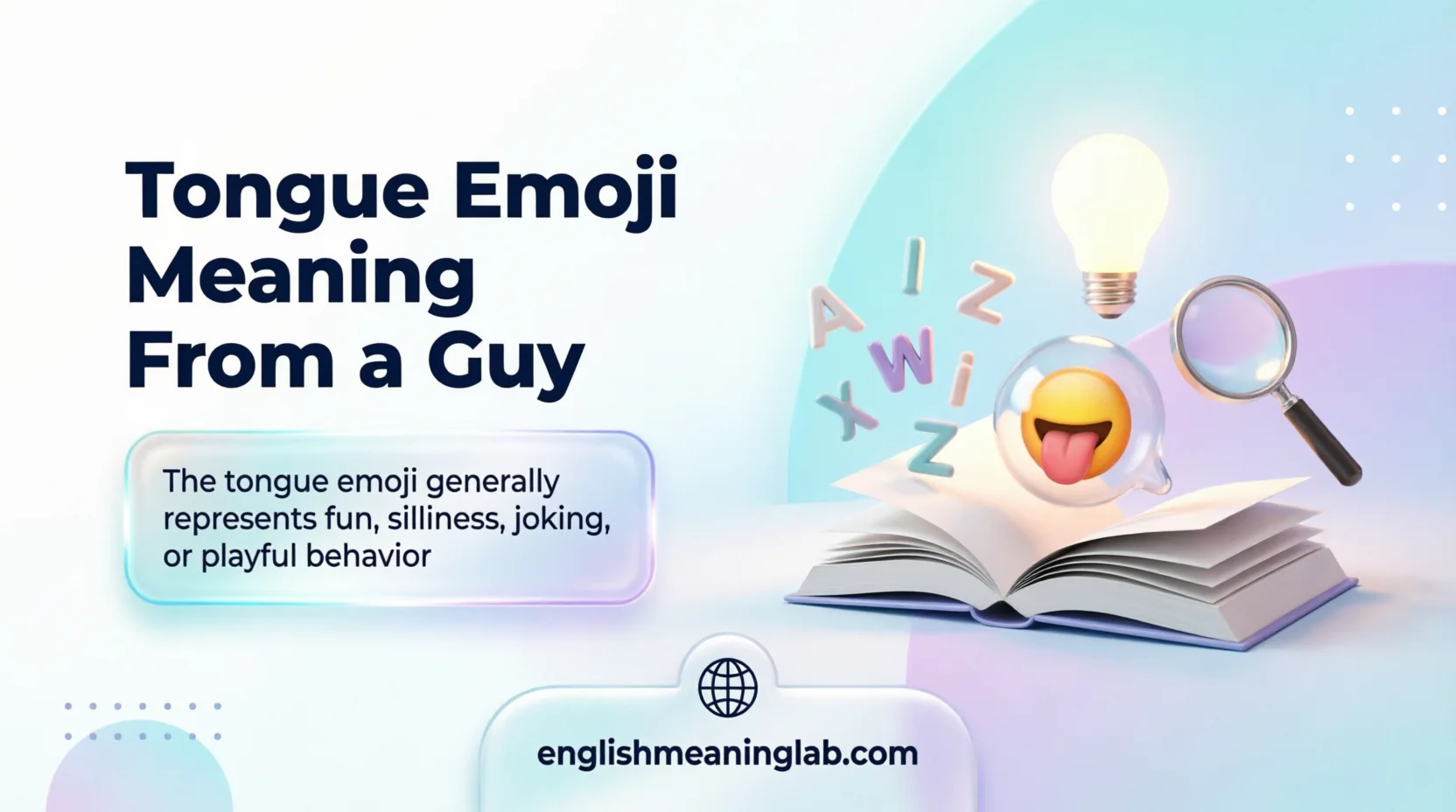
The tongue emoji generally represents fun, silliness, joking, or playful behavior. When a guy sends it, he is often trying to make the conversation feel less serious and more relaxed.
In digital communication, the emoji can appear in several forms:
- 😛 Face with tongue out
- 😝 Face with tongue out and tightly closed eyes
- 😋 Face savoring food
Although each variation has slightly different emotional nuances, they often communicate a similar playful attitude.
A guy may send the tongue emoji when:
- Making a joke
- Teasing someone
- Flirting casually
- Being sarcastic
- Responding playfully
- Showing excitement about food or an activity
For example:
- “You still owe me a coffee 😛”
- “I was right all along 😝”
- “That dessert looks amazing 😋”
In these examples, the emoji softens the message and makes it appear more friendly and fun.
It is important to remember that the emoji itself does not automatically indicate romantic interest. While it can be used in flirting, it is also commonly used among friends and family members.
The most accurate interpretation comes from looking at the surrounding conversation rather than focusing on the emoji alone.
Background
The tongue-out expression has existed long before smartphones and social media. In everyday life, sticking out one’s tongue is often associated with playful teasing, joking, or acting silly.
As digital communication evolved, emoji designers created visual symbols that reflected common facial expressions. The tongue emoji became a natural way for people to express playful emotions online.
Its popularity increased as messaging apps, social networks, and mobile devices became part of everyday communication. Instead of typing long explanations, users could simply add a tongue emoji to indicate they were joking or not being completely serious.
Over time, different communities developed slightly different interpretations. Some people began using it as a flirting signal, while others continued to use it primarily for humor and friendly teasing.
Because emoji meanings are shaped by social usage rather than strict definitions, the interpretation of the tongue emoji continues to evolve. Today, it remains one of the most commonly used symbols for playful and casual communication.
Usage in Different Contexts
Chat
In private chats, the tongue emoji often signals humor, teasing, or a relaxed attitude.
Examples:
- “You’re so dramatic 😛”
- “I might beat you at this game 😝”
The sender usually wants the message to sound friendly rather than harsh.
Social Media
On social platforms, the emoji can be used to react to photos, memes, jokes, and posts.
A guy may use it to:
- Respond to funny content
- Show playful interest
- Join a joke
- Add personality to a comment
Professional Fields
The tongue emoji is generally uncommon in formal professional communication.
In workplace conversations, it may occasionally appear between colleagues who have a casual relationship, but it is usually avoided in serious business discussions because it can seem unprofessional.
Casual Conversations
Among friends and acquaintances, the tongue emoji is widely accepted as a symbol of fun and lighthearted interaction.
It often communicates:
- Playfulness
- Humor
- Friendly teasing
- Casual enjoyment
In these situations, people rarely interpret it as a serious statement.
Meaning in Chat, WhatsApp, Instagram, and TikTok
On WhatsApp, the tongue emoji commonly appears in everyday conversations between friends, relatives, and romantic interests.
Example:
- “You’re always late 😛”
This usually sounds playful rather than critical.
On Instagram, a guy might use the emoji in:
- Story replies
- Comments
- Direct messages
Depending on the conversation, it may suggest joking behavior, admiration, or light flirting.
TikTok
TikTok users frequently use emoji to react to videos and trends.
The tongue emoji may express:
- Playfulness
- Excitement
- Humor
- Entertainment
General Text Messaging
In regular texting, the emoji often acts as an emotional cue that tells the reader not to take the message too seriously.
Without the emoji, some messages could appear rude or overly direct. Adding it often makes the tone friendlier.
Meaning in Physics, Medical, and Aircraft Terminology
Physics
The tongue emoji does not have a recognized or standard meaning in physics terminology.
Medical Terminology
The tongue emoji is not a standard medical symbol or abbreviation used in professional medical terminology.
Although the human tongue is an anatomical structure, the emoji itself has no accepted medical definition.
Aircraft or Aviation Terminology
The tongue emoji has no recognized meaning in aircraft or aviation terminology.
Its usage is primarily limited to digital communication, texting, and social media interactions.
Common Misconceptions
Several misunderstandings surround the tongue emoji.
It Always Means Flirting
This is one of the most common misconceptions. While it can be flirtatious, it is frequently used simply to joke around.
It Is Always Romantic
Many people assume a guy is expressing romantic interest whenever he sends the emoji. In reality, friends often use it with no romantic intention.
It Has One Universal Meaning
Emoji meanings vary by context, culture, platform, and relationship. There is no single interpretation that applies in every situation.
It Is Always Immature
Some people view playful emoji as childish. However, many adults use them regularly to add personality and warmth to conversations.
Similar Terms & Alternatives
Several emoji and expressions are similar to the tongue emoji.
😉 Winking Face
Often suggests humor, teasing, or subtle flirting.
😄 Smiling Face
Shows friendliness and happiness without teasing.
😂 Face With Tears of Joy
Usually indicates laughter or amusement.
😜 Winking Face With Tongue
Combines playful teasing with a wink.
🤪 Zany Face
Represents extreme silliness or joking behavior.
😏 Smirking Face
Can imply confidence, flirting, or playful intentions.
Although these emoji share similarities, each creates a slightly different tone in conversation.
How to Respond to It
The best response depends on the context and your relationship with the sender.
Respond Playfully
If the conversation is friendly:
- “Very funny 😄”
- “Nice try 😛”
- “You’re impossible 😂”
Continue the Joke
If he is teasing you:
- “Keep dreaming 😝”
- “That’s what you think!”
Respond Casually
If you are unsure of the meaning:
- “Haha, okay.”
- “Sounds good.”
Respond Flirtatiously
If mutual flirting is already part of the conversation:
- “Is that your way of teasing me? 😉”
- “You’re being cute today 😛”
Matching the overall tone usually works best.
Differences from Similar Words
Tongue Emoji vs Winking Emoji
The tongue emoji emphasizes playfulness and silliness, while the wink often suggests a hidden joke, flirtation, or shared understanding.
Tongue Emoji vs Smirking Emoji
A smirk can appear more confident, suggestive, or mysterious. The tongue emoji usually feels lighter and less serious.
Tongue Emoji vs Laughing Emoji
Laughing emoji focus on amusement. The tongue emoji focuses more on teasing, joking, or playful interaction.
Tongue Emoji vs Heart Emoji
Heart emoji typically express affection, care, or emotional connection. The tongue emoji is more commonly associated with fun and humor.
These distinctions help readers understand the emotional tone behind different messages.
Relevance in Online Conversations & Dating Apps
The tongue emoji is common in online conversations because it quickly communicates personality and emotion.
On dating apps, a guy might use it to:
- Break the ice
- Make a joke
- Flirt casually
- Keep the conversation playful
However, context remains extremely important. The same emoji may have different meanings depending on:
- Previous messages
- Relationship status
- Communication style
- Frequency of use
For example, a playful emoji from a close friend may simply be friendly. The same emoji from someone showing romantic interest could be interpreted as light flirting.
Modern digital communication relies heavily on tone indicators, and the tongue emoji often serves as a signal that the conversation should be viewed as fun, relaxed, and informal.
FAQs
What does the tongue emoji mean from a guy in text?
The tongue emoji from a guy usually means he is being playful, joking, teasing, or lighthearted. In some situations, it may also be used as a mild flirting signal.
Is the tongue emoji a flirting emoji?
Sometimes. The tongue emoji can be used for flirting, but it is not automatically romantic. Many people use it simply to joke around with friends and acquaintances.
What does 😛 mean in chat conversations?
In chat conversations, 😛 generally suggests humor, teasing, or playful interaction. It often tells the reader that the message should not be taken too seriously.
What does the tongue emoji mean on social media?
On social media, it usually represents fun, entertainment, excitement, or playful engagement. The exact meaning depends on the post and conversation.
How should I respond to a tongue emoji from a guy?
You can respond with humor, a playful emoji, or a casual message. Matching the tone of the conversation is usually the easiest approach.
Can the tongue emoji have different meanings?
Yes. The tongue emoji can represent joking, teasing, flirting, sarcasm, excitement, or friendliness depending on the situation and relationship between the people involved.
Does the tongue emoji always mean a guy likes you?
No. A guy may use the tongue emoji simply because he is joking or being playful. Additional signs and the broader conversation provide more reliable clues about romantic interest.
What is the difference between 😛 and 😜?
Both are playful, but 😜 includes a wink, which can make it feel more teasing, mischievous, or flirtatious than the standard 😛 emoji.
Conclusion
Understanding the tongue emoji meaning from a guy requires looking at the entire conversation rather than focusing on the emoji by itself.
In most cases, it communicates playfulness, teasing, humor, or a relaxed attitude. It can sometimes be used for light flirting, but it does not automatically indicate romantic interest.
The emoji is widely used across texting platforms, social media apps, and online conversations because it helps people express tone in a simple visual way.
Whether it appears in WhatsApp messages, Instagram comments, TikTok interactions, or dating app chats, its interpretation depends heavily on context.
The relationship between the sender and receiver, the wording of the message, and the overall conversation all influence its meaning. By considering these factors together, you can better understand what the sender is trying to communicate and avoid common misunderstandings.