Emojis have become an important part of modern communication, helping people express emotions that may be difficult to convey through words alone. One emoji that often creates confusion is 😕.
When someone sends this emoji, especially a guy, the meaning is not always immediately clear. Depending on the situation, it can express confusion, uncertainty, disappointment, concern, awkwardness, or mixed feelings.
Many people search for the meaning of this emoji because they receive it in text messages, social media conversations, dating apps, or online chats and want to understand the sender’s intentions. Since emojis do not have a single fixed meaning, context plays a major role in interpretation.
Understanding what 😕 means from a guy requires looking at the conversation, the topic being discussed, and the relationship between the people involved. In most cases, the emoji reflects uncertainty or emotional confusion rather than anger or hostility.
Quick Answer
The 😕 meaning from a guy is usually that he feels confused, uncertain, concerned, disappointed, or unsure about something being discussed. It is most commonly used in text messages and online chats when he does not fully understand a situation, has mixed feelings, or is unsure how to respond.
Meaning & Definition
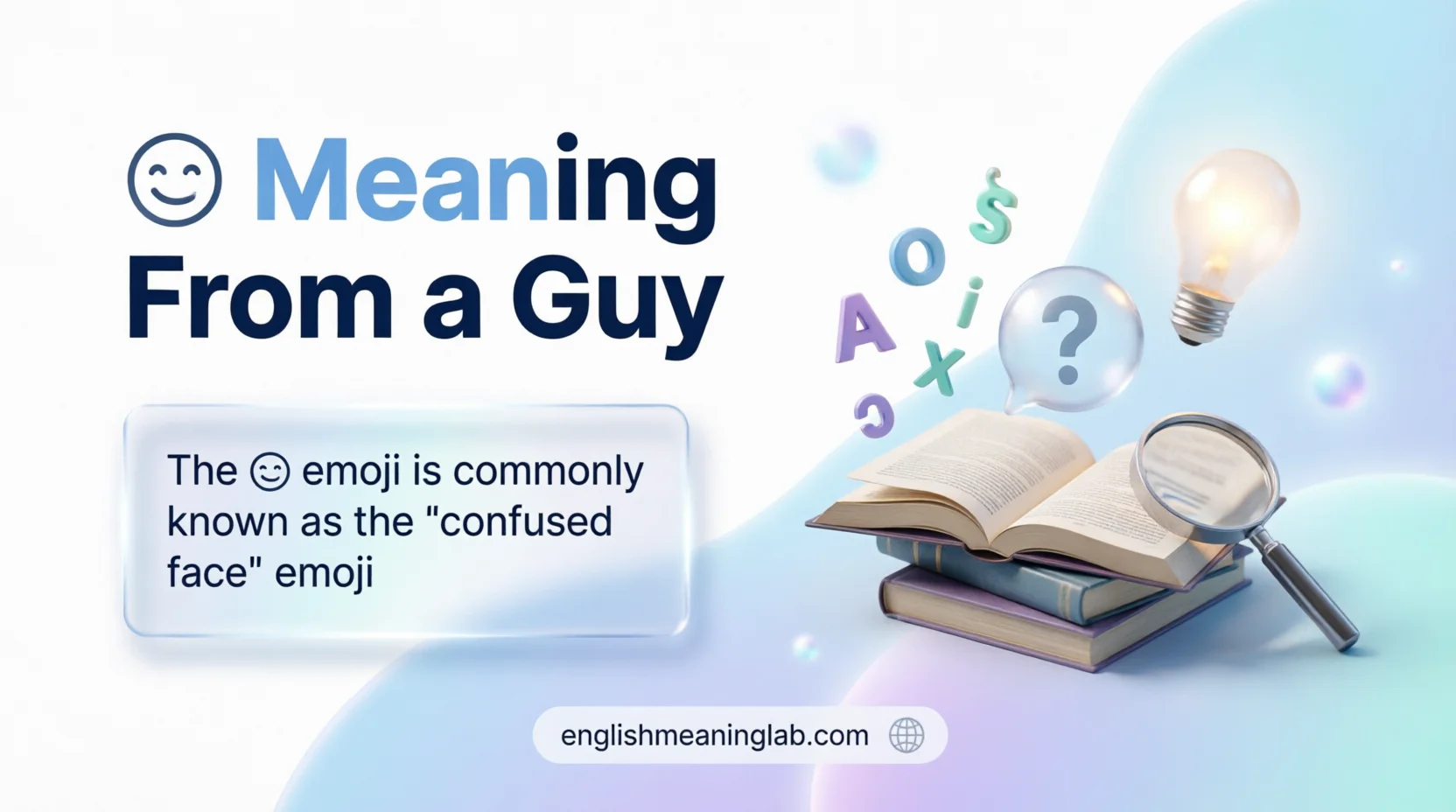
The 😕 emoji is commonly known as the “confused face” emoji. It typically represents a person who is puzzled, uncertain, conflicted, or slightly disappointed.
When a guy uses this emoji, he is often expressing one of several emotions:
- Confusion about what was said.
- Uncertainty about a situation.
- Mixed emotions.
- Mild disappointment.
- Concern or worry.
- Difficulty understanding someone’s intentions.
Unlike angry or upset emojis, 😕 is usually softer and less emotional. It often suggests that the person is trying to process information rather than react aggressively.
For example:
- “I thought we agreed on something 😕”
- “I’m not really sure what you mean 😕”
- “That’s strange 😕”
In these examples, the emoji helps communicate uncertainty and emotional nuance that plain text may not fully express.
The exact meaning depends on the conversation. Sometimes it simply means “I’m confused,” while other times it can indicate disappointment or concern about a situation.
Background
The 😕 emoji became widely used as smartphones, messaging apps, and social media platforms adopted standardized emoji keyboards. The visual design generally shows a face with a slightly furrowed expression and a tilted or uncertain mouth, which naturally conveys confusion or uncertainty.
Unlike many internet abbreviations or slang terms, this emoji does not have a specific origin story tied to a particular online community. Its meaning developed through common usage across digital communication platforms.
Over time, people began using it in a variety of ways beyond simple confusion. The emoji evolved into a flexible expression that can represent:
- Uncertainty
- Hesitation
- Mild concern
- Emotional conflict
- Disappointment
- Lack of understanding
Because facial expressions are universal forms of communication, many users naturally interpret 😕 as a sign that someone is trying to make sense of a situation.
Today, the emoji appears across texting apps, social media platforms, gaming communities, workplace chats, and dating apps. Although its basic meaning remains consistent, its emotional intensity can vary depending on the sender and context.
A close friend may use it casually, while a romantic interest may use it to signal uncertainty about feelings or expectations.
Usage in Different Contexts
Chat
In private chats, 😕 often means:
- “I don’t understand.”
- “I’m confused.”
- “I’m unsure about this.”
- “Something feels off.”
Example:
“I thought we were meeting today 😕”
The sender may be expressing confusion about plans.
Social Media
On social media, the emoji can react to surprising, confusing, or disappointing content.
Example:
“Why did this happen? 😕”
In this case, it communicates uncertainty or disagreement without being overly emotional.
Professional Fields
In professional communication, emojis are generally used sparingly. When 😕 appears, it usually indicates confusion regarding instructions, deadlines, or information.
Example:
“I’m a little confused about the new process 😕”
However, many workplaces prefer written explanations instead of emojis.
Casual Conversations
Among friends and family, the emoji often appears when discussing unexpected events or misunderstandings.
Example:
“That’s not what I heard 😕”
Here, it signals uncertainty rather than conflict.
Meaning in Chat, WhatsApp, Instagram, and TikTok
On WhatsApp, 😕 commonly means confusion or uncertainty.
Example:
“Wait, what happened? 😕”
The sender wants clarification.
On Instagram, it may appear in comments, stories, or direct messages when reacting to surprising content.
Example:
“Why would they do that? 😕”
TikTok
TikTok users often use 😕 in comments when they do not understand a video, trend, joke, or situation.
Example:
“I’m confused 😕”
General Text Messaging
When a guy sends 😕 in a text conversation, he may be:
- Looking for clarification.
- Expressing uncertainty.
- Showing disappointment.
- Communicating concern.
- Reacting to unexpected information.
The surrounding conversation usually reveals which interpretation is most accurate.
Meaning in Physics, Medical, and Aircraft Terminology
Physics
The 😕 emoji does not have any recognized or standard meaning in physics terminology.
Medical Terminology
The emoji is not a medical abbreviation, diagnosis, or recognized medical term. It is simply an emotional symbol used in communication.
Aircraft or Aviation Terminology
There is no standard aviation or aircraft-related meaning associated with the 😕 emoji.
In all three fields, the emoji remains a general communication symbol rather than a technical term.
Common Misconceptions
One common misconception is that 😕 always means sadness.
While sadness can sometimes be involved, the emoji more often represents confusion or uncertainty rather than emotional pain.
Another misunderstanding is that it automatically means anger.
In reality, angry emojis usually have much stronger expressions. The confused face emoji is generally softer and less confrontational.
Some people also assume it indicates romantic rejection. Although it can occasionally signal uncertainty in relationships, it does not automatically mean someone is losing interest.
Others confuse it with:
- 😟 Worried Face
- 😔 Pensive Face
- 🤔 Thinking Face
- 🙁 Slightly Frowning Face
Each emoji communicates a different emotional tone.
Similar Terms & Alternatives
Several emojis and expressions share similarities with 😕.
🤔 Thinking Face
Represents deep thought or consideration rather than confusion.
😟 Worried Face
Focuses more on anxiety and concern.
😔 Pensive Face
Often reflects sadness or regret.
🙁 Slightly Frowning Face
Shows mild disappointment or unhappiness.
“I’m not sure”
A text-based alternative expressing uncertainty.
“Huh?”
A casual way to communicate confusion.
“That’s confusing”
A direct written expression with a similar meaning.
Although these alternatives overlap, each carries a slightly different emotional tone.
How to Respond to It
The best response depends on why the emoji was used.
If it indicates confusion:
- “Let me explain.”
- “Here’s what I meant.”
- “I can clarify that.”
If it indicates uncertainty:
- “Take your time.”
- “What part seems unclear?”
- “What are you unsure about?”
If it signals disappointment:
- “I understand why that feels frustrating.”
- “Sorry for the misunderstanding.”
Example conversation:
Guy: “I thought we were meeting tomorrow 😕”
Response: “Actually, it’s scheduled for Friday. Sorry for the confusion.”
The goal is to address the uncertainty rather than focusing only on the emoji itself.
Differences from Similar Words
😕 vs 🤔
😕 shows confusion or uncertainty, while 🤔 suggests active thinking or consideration.
😕 vs 😔
😕 focuses on not understanding something. 😔 focuses more on sadness or regret.
😕 vs 😟
😟 emphasizes worry and concern, while 😕 emphasizes confusion.
😕 vs 🙁
🙁 usually reflects disappointment or unhappiness. 😕 may include disappointment but primarily signals uncertainty.
Recognizing these differences helps avoid misinterpreting someone’s emotional state.
Relevance in Online Conversations & Dating Apps
In modern digital communication, 😕 is commonly used on messaging platforms, social networks, and dating apps.
On dating apps, the emoji may appear when someone feels:
- Uncertain about intentions.
- Confused by a message.
- Unsure about relationship expectations.
- Surprised by new information.
For example:
“I thought you were looking for something serious 😕”
In this situation, the emoji signals uncertainty rather than hostility.
The meaning can also depend on the relationship between the people communicating. A close friend may use it casually, while a romantic interest may use it to express emotional confusion.
Because online conversations lack tone of voice and facial expressions, emojis help fill emotional gaps. Understanding the broader context remains the key to interpreting them correctly.
FAQs
What does 😕 mean from a guy in text?
When a guy uses 😕 in a text, it usually means he feels confused, uncertain, concerned, or unsure about something. The exact meaning depends on the conversation and context.
Is 😕 a negative emoji?
Not necessarily. It is generally a neutral-to-mildly negative emoji that expresses uncertainty or confusion rather than strong anger or sadness.
What does 😕 mean in chat?
In chat conversations, 😕 commonly means “I’m confused,” “I don’t understand,” or “Something doesn’t seem right.” It often invites clarification.
What does 😕 mean on social media?
On social media, the emoji is often used as a reaction to surprising, confusing, or disappointing posts, comments, videos, or news.
Can 😕 mean disappointment?
Yes. Although confusion is its most common meaning, it can sometimes express mild disappointment when expectations are not met.
How should I respond to 😕?
Respond by addressing the uncertainty behind the emoji. Clarifying information, answering questions, or acknowledging concerns is usually the most effective approach.
Does 😕 mean someone is upset?
Sometimes, but not always. The emoji usually indicates confusion or uncertainty rather than serious anger or emotional distress.
Can 😕 have different meanings?
Yes. Depending on context, it can represent confusion, concern, hesitation, disappointment, mixed feelings, or uncertainty about a situation.
Conclusion
The 😕 emoji is most commonly used to express confusion, uncertainty, concern, or mixed feelings.
When a guy sends this emoji, he is often trying to communicate that something does not fully make sense to him or that he feels unsure about a situation. Although the emoji may occasionally suggest disappointment or concern, it is generally less intense than angry or sad emojis.
Understanding the meaning requires looking at the surrounding conversation rather than the emoji alone. The same symbol can have slightly different interpretations depending on the topic being discussed, the platform being used, and the relationship between the people involved.
Whether it appears in texts, social media comments, WhatsApp messages, Instagram chats, TikTok discussions, or dating apps, the emoji usually signals a need for clarification or expresses uncertainty. Paying attention to context will help you understand its intended meaning more accurately.