If you have received a message containing “DND” or noticed it in someone’s status, profile, or chat settings, you may wonder what it means.
The abbreviation is widely used in digital communication and can appear across texting apps, social media platforms, workplace messaging tools, and smartphones.
People often search for the meaning of DND because the abbreviation can be used in different situations.
In most cases, it relates to a person being unavailable or not wanting interruptions. However, the exact interpretation can vary depending on the context, platform, and conversation.
Understanding DND is useful because it helps prevent misunderstandings in both personal and professional communication.
Whether you see it on WhatsApp, Instagram, TikTok, a text message, or a work chat application, knowing its meaning can help you respond appropriately and understand the sender’s intent.
Quick Answer
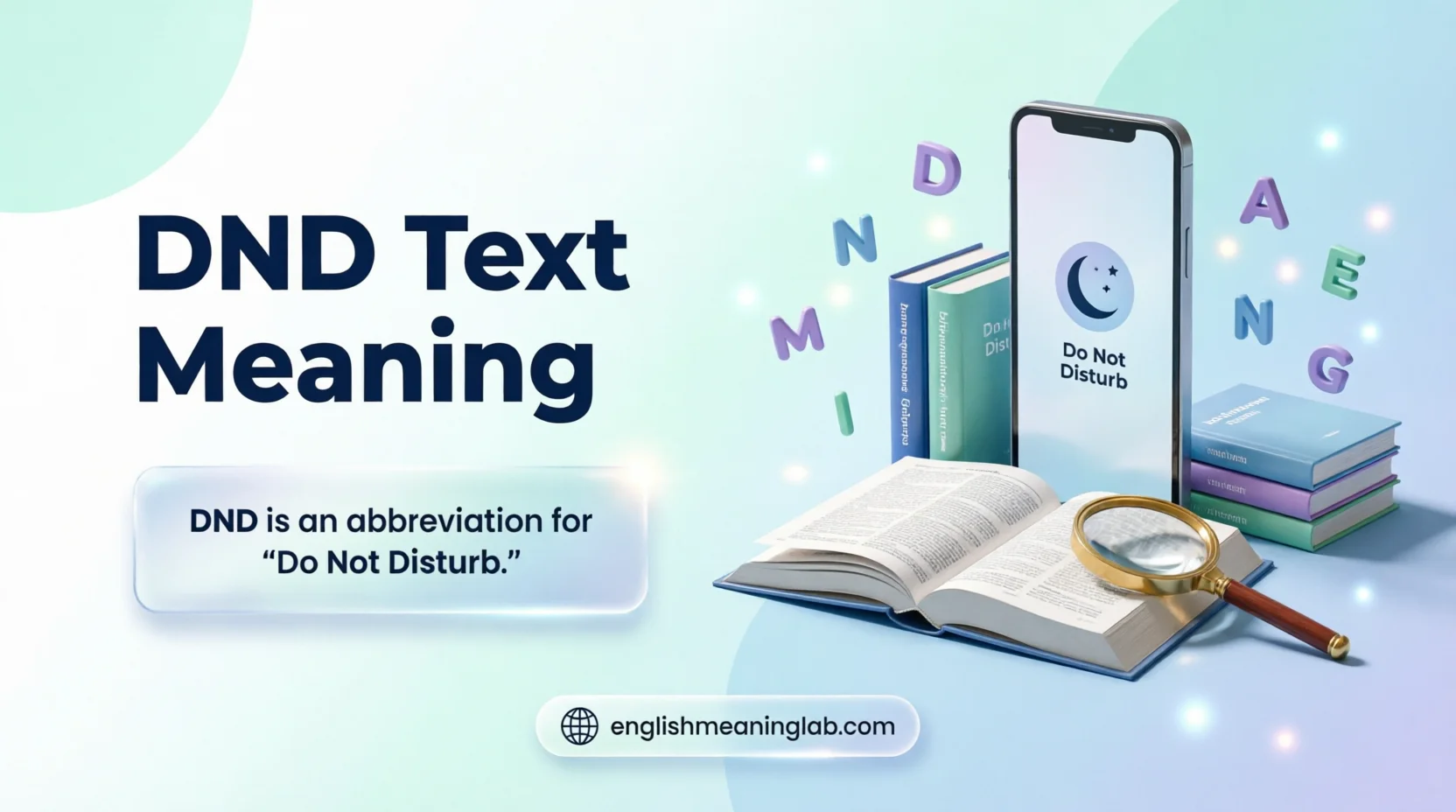
DND text meaning most commonly stands for “Do Not Disturb.” It is used to indicate that a person does not want to be interrupted by messages, calls, or notifications. The term is most often seen in text messages, chat applications, social media statuses, smartphone settings, and online communication platforms where someone wants privacy or uninterrupted time.
Meaning & Definition
DND is an abbreviation for “Do Not Disturb.” In digital communication, it signals that a person is currently unavailable, busy, resting, working, studying, or otherwise prefers not to receive interruptions.
The phrase is commonly used in two ways:
- As a device setting that silences notifications.
- As a message or status informing others that the person is unavailable.
For example, someone might write:
- “I’m on DND right now.”
- “Please put your phone on DND during the meeting.”
- “DND mode is enabled.”
The abbreviation is generally straightforward and carries a polite meaning. It does not usually indicate anger or conflict. Instead, it communicates a need for focus, privacy, or uninterrupted time.
In online communication, DND often functions as a quick way to set expectations. When someone mentions it, they are typically letting others know that responses may be delayed.
Because it is short and easy to understand, DND has become a common part of internet language and smartphone culture. Many messaging platforms and devices even include an official Do Not Disturb mode, making the abbreviation familiar to users worldwide.
Background
The phrase “Do Not Disturb” existed long before texting and social media became popular. Traditionally, it was used on signs placed outside hotel rooms, offices, and private spaces to indicate that interruptions were not welcome.
As technology evolved, the phrase was adopted by telephone systems, computers, and mobile devices. Eventually, smartphone manufacturers and software developers introduced dedicated Do Not Disturb features that allowed users to silence notifications and calls.
Over time, people shortened the phrase to DND for convenience. The abbreviation became common in texting, messaging apps, online gaming communities, and workplace communication platforms.
Its popularity grew because it provided a quick and universally understandable way to communicate availability. Rather than writing a full explanation, users could simply type “DND” to indicate they were busy or temporarily unavailable.
Today, DND is recognized across many digital environments and is one of the most widely understood abbreviations related to communication status.
Usage in Different Contexts
Chat
In private chats, DND usually means the person is busy and may respond later.
Example:
- “I’m on DND while studying.”
Social Media
People often place DND in their bios, stories, or status updates to discourage unnecessary messages.
Example:
- “DND for the next few hours.”
Professional Fields
In workplace communication, DND commonly indicates that an employee is focused on tasks, attending meetings, or unavailable for immediate responses.
Example:
- “Status: DND until 3 PM.”
Casual Conversations
Friends may use DND informally when they want quiet time or are occupied.
Example:
- “Going DND tonight. Need some rest.”
In nearly every context, the central idea remains the same: avoiding interruptions.
Meaning in Chat, WhatsApp, Instagram, and TikTok
On WhatsApp, DND generally means someone has enabled Do Not Disturb mode or prefers not to receive messages immediately.
Example:
- “Phone on DND, I’ll reply later.”
Users may include DND in their profile, notes, or stories to indicate limited availability.
Example:
- “DND today, taking a break from messages.”
TikTok
On TikTok, DND can appear in captions, comments, or profile descriptions. It usually signals that the creator is limiting interactions or taking time away from notifications.
General Chat Messaging
In texting apps, DND often serves as a courtesy notice so others understand delayed responses.
The meaning remains consistent across most platforms and rarely changes significantly.
Meaning in Physics, Medical, and Aircraft Terminology
Physics
DND does not have a widely recognized standard meaning in mainstream physics terminology.
Medical Terminology
DND is not commonly used as a standard medical abbreviation with a universally accepted meaning. Medical professionals may use various abbreviations internally, but DND is not broadly recognized as a primary medical term.
Aircraft or Aviation Terminology
DND is not a standard aviation abbreviation commonly used across the aircraft industry. If encountered in aviation-related materials, its meaning would depend on the specific organization or document.
Therefore, the most recognized meaning of DND remains Do Not Disturb rather than a technical term in these fields.
Common Misconceptions
Several misunderstandings surround DND.
It Means Someone Is Angry
This is usually incorrect. Most people use DND simply because they are busy or want fewer interruptions.
It Means Blocking Someone
DND does not normally mean a person has blocked you. It only indicates limited availability.
It Has the Same Meaning Everywhere
While Do Not Disturb is the dominant meaning, abbreviations can occasionally have specialized meanings within certain communities. Context always matters.
It Guarantees No Notifications
Some Do Not Disturb settings allow exceptions for emergency contacts or important alerts.
Similar Terms & Alternatives
Several expressions have meanings similar to DND:
- AFK – Away From Keyboard
- BRB – Be Right Back
- Busy – Currently occupied
- Offline – Not active online
- Unavailable – Unable to respond
- Silent Mode – Phone notifications muted
- Focus Mode – Reduced distractions
Although these terms share similarities, each communicates availability differently.
How to Respond to It
When someone sends DND or mentions being on DND, a respectful response is usually best.
Examples:
- “No problem, message me when you’re free.”
- “Got it, talk later.”
- “Take your time.”
- “Thanks for letting me know.”
- “Good luck with your work.”
If the matter is urgent, you can politely explain the situation:
- “Whenever possible, please check this important message.”
Respecting the person’s stated availability helps maintain positive communication.
Differences from Similar Words
DND vs AFK
- DND means do not disturb me.
- AFK means away from the keyboard.
Someone can be present but on DND, while AFK suggests physical absence.
DND vs Offline
- DND focuses on avoiding interruptions.
- Offline means not connected or not active online.
DND vs Busy
- Busy describes a condition.
- DND is often a deliberate communication status requesting fewer interruptions.
These distinctions help clarify intent during conversations.
Relevance in Online Conversations & Dating Apps
DND appears frequently in modern online communication. Messaging platforms, gaming communities, social networks, and dating apps all support status indicators that help users communicate availability.
On dating apps, someone may mention DND to explain slower response times rather than a lack of interest. Context is important because communication habits vary between individuals.
In friendships and online communities, DND can indicate study time, work commitments, travel, rest, or a desire for digital privacy.
Because people increasingly manage notifications and screen time, DND has become a practical and socially accepted way to establish communication boundaries.
FAQs
What does DND mean in text?
DND most commonly means “Do Not Disturb.” It tells others that the person does not want interruptions and may respond later to messages or calls.
What does DND mean in chat?
In chat conversations, DND usually indicates that someone is busy, focused, resting, or otherwise unavailable for immediate communication.
Is DND a slang term?
DND is generally considered an abbreviation rather than slang. It is a shortened form of “Do Not Disturb” and is widely understood across digital communication platforms.
What does DND mean on social media?
On social media, DND typically signals limited availability. Users may place it in bios, stories, or statuses to discourage unnecessary messages.
How do you respond to DND?
The best response is usually respectful and understanding. Simple replies such as “No problem,” “Talk later,” or “Message me when you’re free” are appropriate.
Can DND have different meanings?
Yes, abbreviations can sometimes have alternative meanings in specialized communities. However, “Do Not Disturb” is by far the most common and widely recognized meaning.
Does DND mean someone blocked me?
No, DND does not normally mean you have been blocked. It generally indicates that the person is limiting interruptions or may respond more slowly.
Why do people use DND status?
People use DND status to reduce distractions, focus on work or study, rest, protect privacy, or manage notifications more effectively.
Conclusion
DND text meaning most commonly refers to “Do Not Disturb.” It is a widely recognized abbreviation used in text messages, social media platforms, workplace communication tools, and smartphone settings. The phrase helps people communicate that they are busy, unavailable, or temporarily limiting interruptions.
Although DND can occasionally appear in specialized communities with different interpretations, the overwhelming majority of uses relate to avoiding distractions and managing availability. Understanding this meaning can help you interpret messages correctly and respond appropriately.
When you encounter DND in a chat, status, profile, or conversation, it usually does not indicate anger or rejection.
Instead, it serves as a simple and polite way to establish boundaries and set expectations for communication. As with many abbreviations, context remains important, but in most situations, DND simply means that someone prefers not to be disturbed at the moment.