If you spend time texting friends, chatting on social media, or scrolling through online conversations, you may have come across the abbreviation DK.
Like many internet acronyms, its meaning can vary depending on the context in which it is used. This often leads people to search for its definition before responding to a message or joining a conversation.
Texting culture has created countless shortcuts that help people communicate more quickly. Some abbreviations become widely recognized, while others can be confusing because they have multiple meanings. DK is one of those terms that can seem unclear when seen without context.
Understanding what DK means can help you avoid misunderstandings and improve your communication in chats, social media comments, and messaging apps. In most situations, the abbreviation has a simple and straightforward meaning, but context remains important.
This guide explains its meaning, usage, common interpretations, and how people use it across different platforms and situations.
Quick Answer
In text messages and online chats, DK most commonly means “Don’t Know.” People use it when they are unsure about something or do not have the information being requested. For example, if someone asks a question and the answer is unknown, a person may simply reply with “DK” instead of typing “I don’t know.”
Meaning & Definition
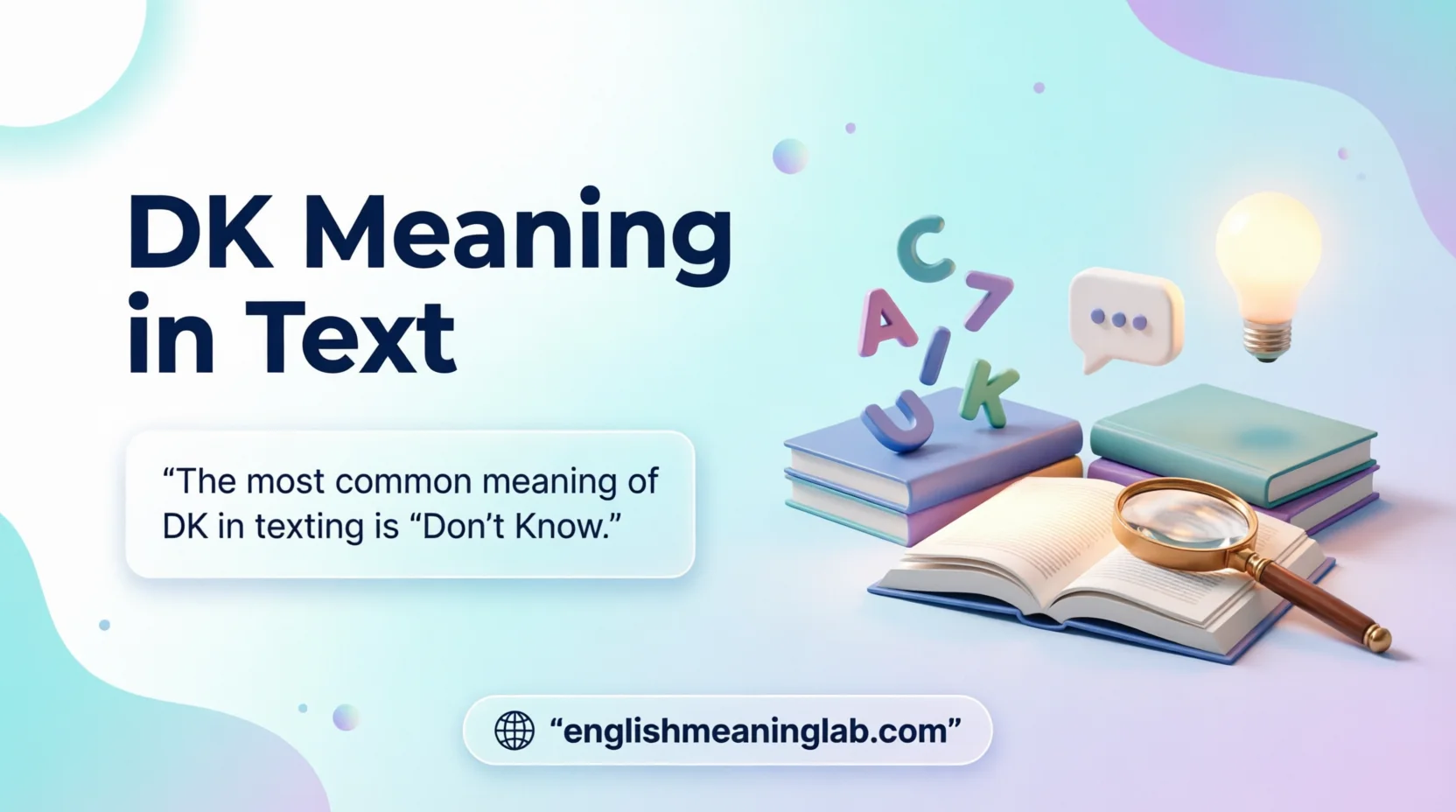
The most common meaning of DK in texting is “Don’t Know.” It serves as a quick response when someone lacks information, is uncertain about a topic, or cannot provide an answer.
For example:
- “What time is the meeting?” – “DK.”
- “Who posted that picture?” – “DK.”
- “Are they coming tonight?” – “DK, maybe.”
This abbreviation saves time and reduces typing effort, especially during fast-paced conversations.
However, abbreviations often depend on context. While “Don’t Know” is the most widely recognized meaning in texting, DK can occasionally represent something different in specialized discussions, gaming communities, or professional settings.
When interpreting DK, it is important to look at the surrounding conversation. If someone is answering a question, “Don’t Know” is usually the intended meaning. If the discussion involves a specific organization, country code, or technical subject, another interpretation may apply.
Because texting relies heavily on shorthand communication, users often prefer quick responses. DK fits perfectly into this style because it delivers a clear message using only two letters.
Background
The rise of abbreviations like DK is closely connected to the growth of digital communication. Early text messaging often had character limits, encouraging users to shorten common phrases whenever possible.
As mobile phones became popular, people developed shorthand expressions to communicate more efficiently. Phrases such as “BRB,” “LOL,” “IDK,” and “DK” became common in everyday conversations. Over time, these abbreviations spread from SMS messages to social media platforms, online forums, and messaging applications.
DK is essentially a shortened form of the phrase “don’t know.” While many users today prefer “IDK” (I Don’t Know), DK continues to appear in casual conversations where brevity is preferred.
The popularity of internet slang has also increased because of younger generations who communicate rapidly through messaging apps. These users often prioritize speed over formal grammar, making abbreviations a natural part of online language.
Today, DK remains a simple expression that helps people quickly communicate uncertainty or lack of knowledge without typing a complete sentence.
Usage in Different Contexts
Chat Conversations
In personal chats, DK is typically used to indicate uncertainty.
Example:
- “Where is Jake?” – “DK.”
Social Media
People use DK in comments, replies, and direct messages when responding to questions or discussing trending topics.
Example:
- “Why was the video removed?”
- “DK, maybe it violated the rules.”
Gaming Communities
Gamers often use DK when they do not know the answer to a question regarding gameplay, updates, or strategies.
Example:
- “How do you unlock that level?”
- “DK.”
Professional Communication
DK is less common in formal workplace communication because professional settings generally favor complete responses. Instead of writing DK, employees usually write “I don’t know” or provide additional clarification.
Online Forums
Forum users may use DK when discussing topics where information is uncertain or unavailable.
Meaning in Chat, WhatsApp, Instagram, and TikTok
Chat
In everyday messaging, DK usually means “Don’t Know.” It is a direct and concise answer.
WhatsApp users often rely on abbreviations for quick communication. DK is frequently used when someone lacks information or cannot confirm details.
On Instagram, DK may appear in comments, story replies, or direct messages. Users often respond with DK when discussing trends, influencers, or viral content.
TikTok
TikTok comments move quickly, encouraging short responses. DK fits naturally into this environment because it allows users to react rapidly without writing full explanations.
Across these platforms, the meaning generally remains consistent and easy to understand.
Meaning in Physics, Medical, and Aircraft Terminology
Physics
DK does not have a universally recognized meaning in standard physics terminology. If it appears in a scientific context, it may represent a variable, abbreviation, or notation defined within a specific document or study.
Medical Terminology
In healthcare records or research documents, abbreviations can vary significantly. DK is not commonly recognized as a standard medical abbreviation across all medical fields. Context is necessary to determine its intended meaning.
Aircraft and Aviation
DK is not widely used as a standard aviation abbreviation. In aviation-related discussions, it may represent a company code, location identifier, or internal reference depending on the context.
When encountering DK in technical fields, always examine surrounding information before assuming it means “Don’t Know.”
Common Misconceptions
One common misconception is that DK always means the same thing in every conversation. While “Don’t Know” is the most common interpretation, context matters.
Another misunderstanding is assuming DK and IDK are completely different expressions. In reality, both communicate uncertainty, although IDK is often considered slightly more common.
Some people also mistake DK for a username, nickname, brand abbreviation, or gaming reference. This can create confusion if the context is unclear.
Finally, some users believe DK sounds rude. In most cases, it is simply a brief response rather than an attempt to be dismissive.
Similar Terms & Alternatives
Several abbreviations share a similar meaning:
- IDK – I Don’t Know
- IDC – I Don’t Care
- IMO – In My Opinion
- TBH – To Be Honest
- NVM – Never Mind
Alternative full-text responses include:
- “I’m not sure.”
- “No idea.”
- “I don’t know.”
- “Not certain.”
- “Can’t say.”
These alternatives may sound more conversational or formal depending on the situation.
How to Respond to It
When someone replies with DK, your response depends on the conversation.
You can:
- Ask another person.
- Provide additional information.
- Clarify your question.
- Continue the discussion.
- Research the answer yourself.
Examples:
- “DK.”
- “That’s okay, I’ll check.”
Or:
- “DK.”
- “No problem, thanks anyway.”
A polite response helps keep the conversation moving smoothly.
Differences from Similar Words
DK vs IDK
- DK = Don’t Know
- IDK = I Don’t Know
Both express uncertainty, but IDK is generally more explicit.
DK vs IDC
- DK means lacking knowledge.
- IDC means lacking interest or concern.
DK vs NVM
- DK indicates uncertainty.
- NVM means the topic is no longer important or relevant.
Understanding these differences prevents confusion during online conversations.
Relevance in Online Conversations & Dating Apps
Abbreviations play a major role in modern communication, including dating apps and social networking platforms.
On dating apps, DK may appear when someone is uncertain about plans, preferences, or personal opinions.
Examples:
- “What movie do you want to watch?”
- “DK yet.”
Or:
- “Where should we meet?”
- “DK, any place works.”
While the abbreviation is common, excessive use can sometimes make conversations seem less engaging. In situations where building a connection matters, providing a fuller response may create better communication.
Nevertheless, DK remains a useful shorthand when a person genuinely does not know the answer.
FAQs
What does DK mean in text?
DK most commonly means “Don’t Know.” It is used when someone does not have an answer or is uncertain about something.
Is DK the same as IDK?
They are very similar. DK means “Don’t Know,” while IDK means “I Don’t Know.” Both express uncertainty.
What does DK mean on social media?
On social media, DK usually stands for “Don’t Know” and is commonly used in comments, replies, and direct messages.
Is DK considered slang?
Yes. DK is considered internet slang or texting shorthand commonly used in casual online communication.
Can DK have different meanings?
Yes. Although “Don’t Know” is the most common meaning, specialized communities may use DK differently depending on context.
Is DK rude?
Not usually. Most people use it simply as a quick response. However, a longer reply may seem more polite in some situations.
Do people still use DK?
Yes. Although IDK is often more common, many users continue to use DK in chats and online conversations.
How should I respond when someone says DK?
You can ask another question, provide more context, or thank them and continue the conversation.
Conclusion
DK is a simple abbreviation that most often means “Don’t Know.” It is widely used in text messages, social media platforms, messaging apps, and online communities whenever someone lacks information or feels uncertain about a topic.
Its popularity comes from the convenience of expressing a complete idea with only two letters.
Although the meaning is usually straightforward, context remains important. In specialized fields such as science, medicine, gaming, or aviation, DK could occasionally represent something entirely different. Looking at the surrounding conversation helps determine the correct interpretation.
As digital communication continues to evolve, abbreviations like DK remain an important part of online language. Understanding these terms makes conversations easier to follow and reduces confusion.
Whether you see it in a text message, Instagram comment, WhatsApp chat, or dating app conversation, DK will most often signal that the person simply does not know the answer.